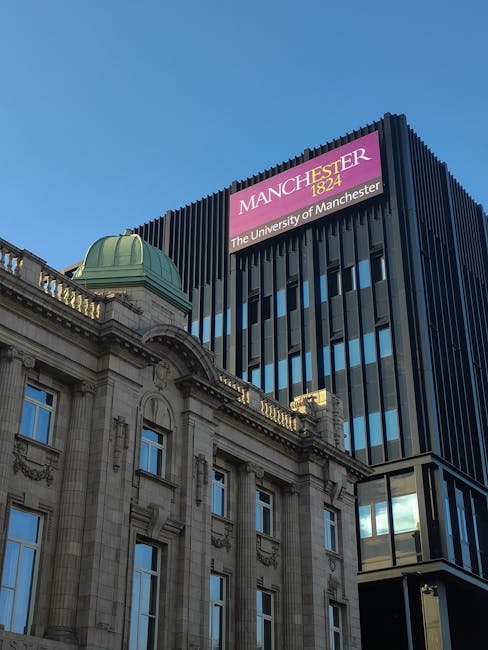
For families in Southeast Asia, the Middle East, and mainland China who map out education budgets 12 to 18 months in advance, the 2026-25 fee schedules published by Russell Group universities are not a distant administrative detail. They are the single largest line item in a financial plan that often spans a three-year undergraduate degree, a one-year taught master’s, and the two-year post-study work window opened by the Graduate Route. The University of Manchester released its updated international tuition fee bands in early 2026, and the figures confirm what many applicants and their parents already suspected: the cost of a classroom-based degree at a UK top-30 institution has crossed the £25,000 threshold for most standard undergraduate programmes, while lab-based and clinical courses now sit firmly above £30,000 per year.
The timing matters. Sterling has traded above RMB 9.0 and SGD 1.70 for much of the 2023-24 cycle, and the Bank of England base rate reached 5.25% on 3 August 2023, where it remained as of the March 2026 Monetary Policy Committee meeting. For families servicing education loans or converting lump sums from currencies pegged to a strong US dollar, the combined effect of fee inflation and exchange-rate pressure has pushed the real cost of a Manchester degree noticeably higher than the sticker price suggested just two years ago. At the same time, the Home Office confirmed on 4 December 2023 that the Graduate Route would remain in place for international students completing a UK degree, preserving the two-year post-study work entitlement that many applicants factor into their return-on-investment calculation. The University of Manchester’s 2026-25 fee structure therefore sits at the intersection of institutional pricing, monetary policy, and immigration rules — and it demands a line-by-line reading.
Undergraduate tuition fees for international students 2026-25
The University of Manchester groups its full-time undergraduate programmes into three fee bands for international students. The published figures for the academic year starting September 2026 are fixed for the duration of a standard three-year or four-year course, which means an offer holder who enrols in 2026 will not face annual in-programme increases.
Classroom-based programmes (Band 1)
Most arts, humanities, social sciences, law, business, and management degrees fall into this category. The University of Manchester has set the 2026-25 international fee at £25,500 per year for Band 1 programmes. This is a £1,500 increase on the 2023-24 figure of £24,000, representing a 6.25% year-on-year rise.
For a three-year BA in Economics or LLB Law, the total tuition commitment at 2026-25 prices is £76,500. At an exchange rate of RMB 9.15 — the mid-market rate observed in late March 2026 — that equates to approximately RMB 700,000. For a Singaporean family converting at SGD 1.72, the three-year total is roughly SGD 131,600. These figures exclude accommodation, the immigration health surcharge, and living costs, which UK Visas and Immigration (UKVI) currently sets at £1,023 per month for Manchester (outside London) for the 2026 student visa financial requirement.
Laboratory-based programmes (Band 2)
Degrees in the biological and physical sciences, engineering, and most STEM disciplines carry a higher resource charge. The University of Manchester has set the 2026-25 Band 2 fee at £30,000 per year for international students. This is up from £28,500 in 2023-24, a rise of £1,500 or 5.3%.
For a standard three-year BEng in Mechanical Engineering or BSc in Computer Science, the total tuition is £90,000. Integrated master’s programmes such as the MEng Chemical Engineering or MPhys Physics extend to four years, bringing the total to £120,000 at the 2026-25 rate. These programmes are popular with applicants from the Gulf, where ABET and IChemE accreditation pathways align with regional engineering registration requirements, and with Chinese students targeting the two-year Graduate Route for UK work experience before returning to a domestic job market that values overseas STEM credentials.
Clinical programmes (Band 3)
Medicine and dentistry sit in a separate fee tier. The University of Manchester’s MBChB Medicine (five years) and BDS Dentistry (five years) carry an annual international fee of £36,000 for years 1 and 2, rising to £46,000 for years 3, 4, and 5 in the clinical placement phase. These figures were confirmed in the university’s 2026-25 fee schedule published on its website in February 2026.
The total tuition for the five-year MBChB is therefore £210,000: two years at £36,000 (£72,000) plus three years at £46,000 (£138,000). Dental students on the five-year BDS face the same structure. For families in the Middle East and Southeast Asia where medicine remains a high-status pathway, this represents one of the largest single financial commitments in UK higher education. The General Medical Council’s provisional registration and the Foundation Programme pathway mean graduates can enter UK clinical practice immediately, but international students should note that the UK Foundation Programme Office uses a points-based allocation system and that competition for posts in popular deaneries has intensified.
Postgraduate taught fees for international students 2026-25
Manchester’s one-year taught master’s programmes are the largest single cohort of international enrolments. The university publishes fees by faculty, with most programmes falling into a standard band within each school.
Faculty of Humanities
The majority of MA, MSc, and LLM programmes in the Faculty of Humanities — including those in the Manchester Business School, School of Law, School of Social Sciences, and School of Arts, Languages and Cultures — carry a 2026-25 international fee of £27,500. This is a £1,500 increase on the 2023-24 figure of £26,000.
The Manchester MBA, a flagship programme ranked inside the Financial Times Global MBA top 50, is priced separately. The full-time MBA (18 months) international fee for September 2026 entry is £48,000 in total, unchanged from the previous intake. Applicants from mainland China, who represented 32% of all UK sponsored study visa grants in the year ending September 2023 according to Home Office immigration statistics published on 23 November 2023, are a significant presence on both the MBA and the specialist MSc programmes in finance, marketing, and business analytics.
Faculty of Science and Engineering
Taught master’s programmes in the Faculty of Science and Engineering — covering computer science, electrical and electronic engineering, mechanical and civil engineering, chemistry, physics, earth and environmental sciences, and mathematics — are set at £33,500 for 2026-25 entry. This is up from £31,500 in 2023-24, a rise of £2,000 or 6.3%.
The MSc Advanced Computer Science, consistently one of the most over-subscribed programmes for international applicants, falls into this band. The total one-year cost, including the UKVI living-cost requirement of £12,276 (£1,023 × 12 months), reaches £45,776 before accommodation premiums in Manchester’s city-centre purpose-built student accommodation, where en-suite rooms in buildings near the Oxford Road campus now routinely list above £200 per week on 51-week contracts.
Faculty of Biology, Medicine and Health
Taught master’s programmes in public health, biomedical sciences, and related fields carry a 2026-25 international fee of £32,000 for most courses. The MPH Public Health and MSc Medical Microbiology are priced at this level. Clinical master’s programmes with significant placement components, such as the MSc Advanced Clinical Practice, may carry higher fees and applicants should check the specific course page on the university’s website.
Deposit, payment schedule, and financial guarantees
The University of Manchester requires a tuition fee deposit from most international postgraduate taught offer holders. For 2026-25 entry, the deposit is £1,000, which is deducted from the first tuition fee instalment. The deposit deadline is typically specified in the offer letter and falls 4 to 6 weeks after the offer is issued. For applicants holding conditional offers who are waiting for final degree results or IELTS scores, the deposit deadline may be extended, but this is not automatic and must be requested through the admissions portal.
The standard payment schedule splits the annual fee into two instalments: 50% at or before registration in September, and 50% in January. Some programmes allow a three-instalment plan. Students who require a Confirmation of Acceptance for Studies (CAS) for their Student visa application must have paid the deposit and any outstanding fee balance that exceeds the CAS issuance threshold. UKVI rules require that the CAS states the total course fees for the first year and the amount already paid; the difference must be demonstrable as part of the maintenance funds requirement alongside living costs.
IELTS, English language entry requirements, and the UCAS timeline
The University of Manchester’s standard English language requirement for most undergraduate and postgraduate programmes is an IELTS Academic overall score of 6.5 with no component below 6.0. Programmes in law, medicine, and some humanities subjects require a higher threshold — typically IELTS 7.0 overall with no component below 6.5, and in some cases a writing score of 7.0. The university accepts IELTS One Skill Retake for 2026-25 entry, a policy confirmed on its admissions pages in late 2023.
For undergraduate applicants using the UCAS route, the equal-consideration deadline for 2026 entry was 31 January 2026. Late applications submitted through UCAS Extra opened on 28 February 2026 and remain available while places are unfilled. International applicants who miss the January deadline should check the UCAS search tool for course availability and note that Manchester’s most competitive programmes — including medicine, dentistry, and certain engineering and business courses — rarely enter Extra or Clearing with places for international students.
For postgraduate taught applicants, Manchester operates a rolling admissions cycle with no single deadline. However, popular programmes such as MSc Advanced Computer Science, MSc Data Science, and MSc Finance routinely close to international applicants by March or April for September entry. The university’s online application portal shows real-time programme status, and applicants from mainland China should note that the university operates a tiered admissions system with specific grade requirements for institutions recognised by the Chinese Ministry of Education. A typical requirement for a Russell Group master’s programme is a four-year bachelor’s degree with a minimum average of 80-85% from a recognised Chinese university, though exact thresholds vary by school and programme.
Scholarships and external funding
The University of Manchester offers a limited number of international scholarships for 2026-25 entry. The Manchester Master’s Bursary provides £4,000 towards tuition fees for taught master’s students from underrepresented groups, and a small number of country-specific awards are available through the British Council’s GREAT Scholarships scheme, which for the 2026-25 cycle offers £10,000 towards tuition fees for applicants from China, Malaysia, Thailand, and several other eligible countries. The university’s Equity and Merit Scholarships, funded by alumni donations, provide full tuition fee waivers and living-cost stipends for master’s students from Ethiopia, Malawi, Rwanda, Tanzania, Uganda, and Zimbabwe.
For undergraduate applicants, the Manchester International Excellence Scholarship offers £5,000 per year for the duration of the degree to a small number of high-achieving international students. The scholarship is competitive and assessed on academic merit at the point of application. Families should note that these awards reduce the tuition fee liability but do not affect the UKVI maintenance funds requirement for visa purposes; the full living-cost amount must still be demonstrated regardless of any scholarship award.
What applicants and families should do now
-
Lock in the exchange-rate assumption. If your home currency is pegged to or correlated with the US dollar, model the total three-year or four-year cost at today’s spot rate plus a 5% buffer. Sterling volatility against the renminbi and Singapore dollar has been a larger factor in real-cost increases than the headline fee rise itself over the past two cycles.
-
Pay the deposit early if you are certain. The £1,000 postgraduate deposit is refundable only in limited circumstances, but paying it secures your place and locks the published 2026-25 fee. Delaying until August risks the programme closing and leaves you exposed to any mid-cycle exchange-rate shift when you convert the larger first-instalment sum.
-
Check the IELTS component scores, not just the overall band. A 6.5 overall with a 5.5 in writing will not meet Manchester’s standard requirement. If you are sitting the IELTS in May or June 2026, book a date that allows time for a One Skill Retake if needed, and confirm with your department that the retake is accepted for your specific programme before you pay for it.
-
Map the Graduate Route timeline into your financial plan. The two-year post-study work window means you should budget for 12 months of master’s tuition plus 24 months of UK living costs, minus any earnings during the Graduate Route period. The median starting salary for Manchester graduates entering UK employment is approximately £28,000-£32,000 depending on sector, according to the university’s Graduate Outcomes survey data published in 2023, but this varies widely by discipline and individual circumstance.
-
Do not assume Clearing availability for high-demand courses. If you are targeting a Band 2 or Band 3 undergraduate programme at Manchester and missed the 31 January UCAS deadline, prioritise UCAS Extra while places remain visible on the UCAS search tool. Waiting until A-level results day in August is a high-risk strategy for international applicants who also need 4 to 8 weeks for visa processing after CAS issuance.