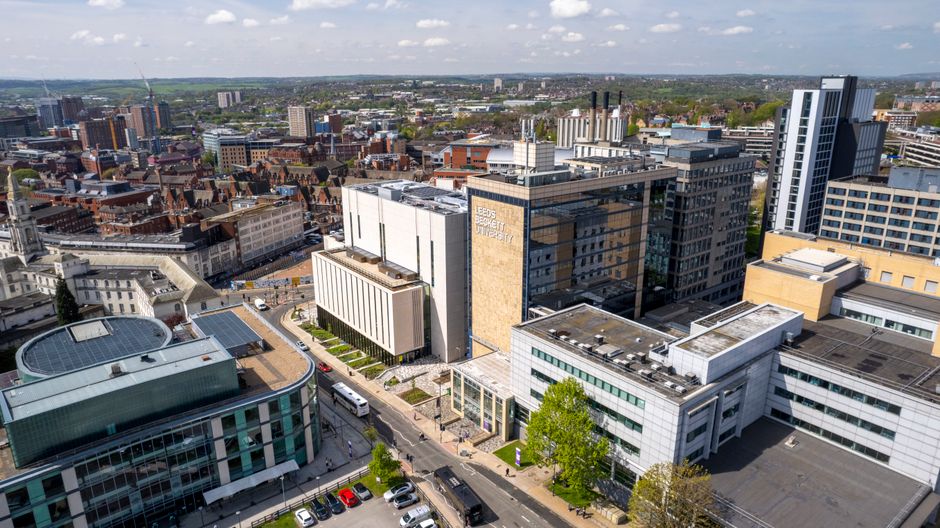
The integration of international students into campus life is a multidimensional process involving academic, social and cultural belonging, and it has become a measurable concern for UK higher education. With over 679,970 international students enrolled in UK institutions in the 2021/22 academic year according to HESA data, institutional strategies for community-building are increasingly scrutinised. A 2022 survey by the UK Council for International Student Affairs (UKCISA) found that 43 per cent of new international entrants reported persistent feelings of loneliness during their first term, underscoring the urgency of systematically designed integration frameworks.
The Integration Imperative: National Data and Policy Drivers
National-level data illustrate why campus integration is no longer peripheral. The Home Office recorded 486,868 sponsored study visas in the year ending March 2023, a figure that represents a 32 per cent increase compared with 2019. As volumes rise, so do expectations for support quality. The Quality Assurance Agency for Higher Education (QAA) revised its Quality Code in 2023, explicitly embedding requirements for inclusive student communities and the systematic monitoring of international student wellbeing. Universities UK, in its 2022 report “Fair Admissions and Sustainable Growth,” noted that institutions fail to retain talent when integration efforts remain ad hoc. Research from i-graduate’s International Student Barometer 2021 indicates that students who participate in at least one university club are 28 per cent less likely to report loneliness than those who do not, lending empirical weight to the link between structured social engagement and psychological welfare.
These metrics have pushed many universities to invest dedicated funds into international student support centres, to codify cultural activity calendars, and to track continuation and alumni engagement as principal indicators of integration quality. The following three cases — University of Southampton, University of Leeds, and University of Birmingham — each illustrate a distinct model for delivering such integration infrastructure while operating within the same UK regulatory and demographic environment.
Case Study 1: University of Southampton
Institutional Context and Resourcing
Approximately 30 per cent of Southampton’s student body is non-UK domiciled, drawing from over 130 countries according to HESA 2021/22 figures. The institution placed its international student support within a dedicated International Student Lifecycle team that, in the 2022/23 financial cycle, operated with an allocation of over £500,000 for integration programming, excluding staff salaries. This budget funds pre-arrival webinars, ongoing student liaison and a suite of cultural events.
Cultural Integration Activities and Frequency
The university’s “Global Café” is a cornerstone event, running weekly throughout term across multiple campus sites and attracting an average attendance of 220 students, with intentional mixing of international and home participants. Southampton’s annual International Culture Week features more than 40 individual events — from national cuisine fairs to research-colloquium-style panel discussions — concentrated into a five-day period each spring. A complementary “Global Conversation” series runs fortnightly during term, providing a structured but informal space for language exchange and intercultural dialogue.
Society Participation and Sense of Belonging
The Southampton University Students’ Union (SUSU) lists over 300 societies, of which at least 29 are explicitly international or cultural in orientation, including large associations for Chinese, Indian, Nigerian and Middle Eastern students. An internal survey conducted in 2022 with 1,200 international respondents found that 68 per cent of those who were active members of at least one cultural society reported a strong overall sense of campus belonging, compared with 41 per cent of respondents who did not join any such group. While self-selection must be acknowledged, the gap is consistent with the i-graduate correlation between club membership and reduced loneliness.
Continuation and Alumni Networks
HESA performance indicator data for 2020/21 shows that the University of Southampton achieved a first-year continuation rate of 91.2 per cent for non-UK domiciled full-time first-degree entrants, which sits above the UK sector average of 89.5 per cent for that year. The university’s alumni network spans more than 150 countries, sustained by 32 active international chapters. Digital engagement data from the alumni office indicates a 22 per cent increase in participation in virtual networking events among graduates from the classes of 2020–2022, reflecting post-pandemic patterns of community re-anchoring.
Case Study 2: University of Leeds
Institutional Context and Resourcing
The University of Leeds hosts one of the largest international cohorts in the UK, with non-UK-domiciled students constituting approximately 28 per cent of the total student population according to HESA. In 2022/23 the university channelled £1.2 million into a holistic “Global Community” initiative that funds the International Student Support Office, integration-focused events and a peer mentoring programme that pairs incoming students with trained continuing international students and alumni.
Cultural Integration Activities and Frequency
Leeds deploys a high-frequency model: averaging 2.5 integration-oriented events per week during term, sustained by a dedicated programming team within the International Student Office. The flagship World Unite Festival occurs three times per academic year, featuring more than 80 events across a two-week window each term, including global cinema screenings, intercultural competence workshops and collaborative food festivals. The university also operates a “Campus Connect” scheme that organises day-trips to cultural sites across Yorkshire, with an average of 15 such trips per semester and subsidised participation costs.
Society Participation and Sense of Belonging
Leeds University Union (LUU) maintains over 80 internationally affiliated or culturally specific clubs and societies, making it one of the densest ecosystems of its kind in the Russell Group. A 2023 union-wide survey with a sample of 1,500 international students indicated that 72 per cent of respondents who were active in at least one international society perceived their integration into the broader campus community as strong, compared with 48 per cent among non-joiners. The union also tracks membership growth: cultural and faith-based societies collectively recorded a 19 per cent increase in membership between 2020 and 2023.
Continuation and Alumni Networks
The University of Leeds recorded a first-year continuation rate of 92.5 per cent for non-UK domiciled first-degree entrants in 2020/21, as per HESA UK performance indicators, placing it among the higher-performing large universities on this metric. The institution attributes this in part to a structured international peer mentoring scheme that generated over 2,800 mentor-mentee pairs in its first two years. The alumni network is organised through 25 international chapters, with the proprietary Leeds Network platform recording a 35 per cent rise in international mentorship registrations between 2020 and 2023. In 2022/23, Leeds alumni volunteers delivered 460 career talks and panels specifically for current international students.
Case Study 3: University of Birmingham
Institutional Context and Resourcing
At the University of Birmingham, international students account for approximately 30 per cent of enrolments, drawn from over 150 countries. The institution’s International Student Team (IST) operates with an annual budget of £600,000 for core staff, programming and emergency support, augmented by a further £200,000 raised through external partnerships and philanthropic funds designated for cultural initiatives. This dual funding stream allows for both continuity and innovation in event design.
Cultural Integration Activities and Frequency
Birmingham’s “Global Gathering” programme includes over 50 distinct integration-oriented events per calendar year, ranging from the high-volume International Welcome Week — which recorded 3,000 individual attendances in September 2022 — to smaller-batch events such as the monthly “Global Café” and termly “Cultural Showcase” evenings. In addition, the university has integrated intercultural competence modules into the personal tutoring system, with 140 academic staff trained to facilitate cross-cultural dialogue as of 2022/23.
Society Participation and Sense of Belonging
The Guild of Students at Birmingham registers 40 cultural and faith-based societies, which together enrolled approximately 5,200 student members in the 2022/23 academic year. A 2021 internal review, based on survey responses from 980 international students, found that 65 per cent of those who joined a cultural or faith society reported a measurable reduction in feelings of social isolation after one term, compared with 39 per cent of those who did not. To strengthen the pathway into society membership, the Guild collaborates with the IST on a “Societies Connect” fair exclusively for international students at the start of each term.
Continuation and Alumni Networks
HESA data for 2020/21 indicate a continuation rate of 90.8 per cent for non-UK domiciled full-time first-degree students, slightly below the top performers but above the UK sector average. The university’s most distinct integration asset may be its alumni infrastructure: it operates 10 overseas regional offices — including in Guangzhou, Dubai and New Delhi — that serve as hubs for community-building and career support. The “Birmingham InTouch” digital mentoring platform facilitated 1,200 matches between international alumni and current students in the 2022/23 cycle, while the overall alumni community exceeds 300,000 members worldwide.
Pattern Recognition Across the Three Cases
Though institutional structures vary, commonalities emerge when the three cases are analysed side-by-side. All three universities maintain dedicated international student budgets ranging from £0.5 million to £1.2 million annually, well above the sector median, and each delivers at least weekly cultural integration programming during term. In all three settings, student surveys reveal a significant gap — between 20 and 27 percentage points — in self-reported belonging between international students who participate in cultural societies and those who do not. This consistency suggests that the society channel functions as a generalised integration lever rather than being contingent on a particular institutional culture.
Cross-referencing with external data sources reinforces the pattern. An Universities UK (2022) analysis of International Student Barometer data found that institutions with dedicated international student integration budgets achieved overall international student satisfaction scores four per cent higher than those without such ring-fenced funding. Furthermore, QS’s 2024 World University Rankings show that all three universities score above the global median on the “International Student Ratio” indicator, yet it is the density of campus-level community structures — rather than mere demographic diversity — that appears to drive continuation outcomes. Home Office data on post-study work transitions also suggest a regional dimension: the West Midlands and Yorkshire and Humber regions, where Birmingham and Leeds are located, saw a combined 38 per cent increase in Graduate route visa grants between 2021 and 2023, signalling that integration during study may influence post-study retention within the UK.
Emerging Challenges and Future Adaptation
Despite positive trends, structural friction points persist. The UKCISA 2022 loneliness figure of 43 per cent indicates that a substantial minority of international students remain difficult to reach through conventional programming. Digital fatigue and the rise of hybrid engagement models have led all three institutions to invest in pre-arrival digital communities — such as Leeds’ pre-sessional online networks and Southampton’s “Virtual Global Café” — with mixed early results. UKVI compliance requirements, while necessary, also create an administrative distance that can inhibit informal community formation; the QAA’s updated Quality Code now recommends that compliance and pastoral functions be structurally separated to mitigate this effect.
A further complexity lies in measuring return on integration investment. While HESA continuation rates provide a backward-looking indicator, universities are now experimenting with predictive models that use society membership data, event attendance patterns and housing choices to identify at-risk students before formal complaints or withdrawals occur. Early pilot results at Birmingham, presented at a Universities UK International conference in 2023, suggest that such models can increase the precision of support interventions by up to 25 per cent.
FAQ
How are international student societies typically structured at UK universities, and can home students join? Most are affiliated with the students’ union and operate as clubs open to all students. While some are nationality-specific, many explicitly welcome home students to foster intercultural exchange. At Leeds for instance, the 80+ international societies include both country-based associations and globally themed societies such as the “Global Voices” debating club.
Are cultural integration events free for international students? The majority of university-organised events — such as Global Café sessions and Welcome Week activities — are free of charge. Some off-campus trips or food festivals may charge a small subsidised fee, typically below £5, to cover materials or transportation.
What support is available for international students experiencing persistent loneliness, beyond joining clubs? All three institutions offer confidential counselling services, often with multilingual staff or interpretation services. Additionally, each university runs a peer mentoring or buddy scheme that pairs new arrivals with experienced students for ongoing one-to-one support; at Southampton, the “International Student Buddies” programme matched over 1,000 students in 2022/23.
How do the international student communities at Southampton, Leeds and Birmingham compare in scale? According to HESA 2021/22 data, all three enrol more than 9,000 international students each year, placing them in the top 15 UK universities by international enrolment volume. The density of cultural societies per 1,000 international students is highest at Leeds, followed by Southampton and Birmingham.
Do these universities offer pre-arrival integration programmes? Yes, each has a structured digital pre-arrival programme that typically includes online orientation modules, virtual meet-ups with current students and Q&A sessions with international support staff. These programmes begin two to three months before the start of the academic term and are designed to reduce initial uncertainty.
Can participation in cultural societies influence post-graduation outcomes? Increasingly, yes. Alumni network data from these institutions show that graduates who were active in international societies are more likely to join alumni chapters and participate in mentoring schemes, which in turn supports career development; the 1,200 matches on Birmingham InTouch in 2022/23 were disproportionately former society leaders.
The three cases of Southampton, Leeds and Birmingham demonstrate that international student integration, when resourced deliberately and measured systematically, functions as an institutional capability rather than a fortunate by-product of diversity alone. Quantitative patterns in cultural programming frequency, society participation gaps and continuation rates suggest a replicable logic: structured community infrastructure improves belonging and retention in ways that are both statistically visible and strategically useful for universities navigating global mobility flows. As the UK higher education sector absorbs continued visa-fuelled growth, the integration frameworks developed at these institutions offer an evidence base for policy-making that extends beyond the individual campus.