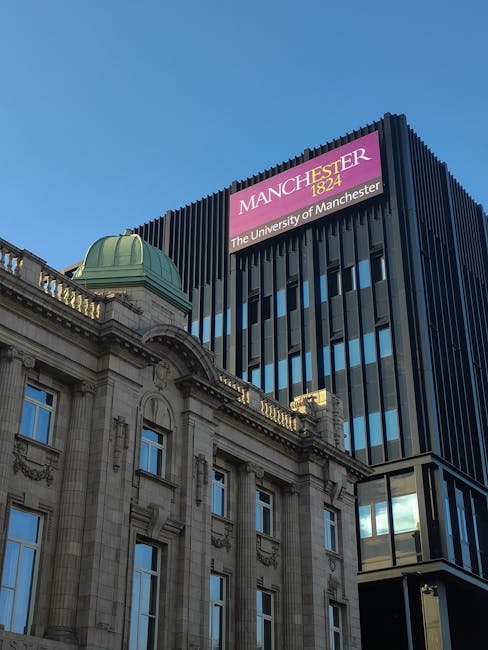
Comparing the University of Manchester and the University of Birmingham for an international applicant means weighing two Russell Group institutions with distinct urban profiles and student bodies. According to Higher Education Statistics Agency (HESA) data for the 2022/2023 academic year, Manchester enrolled roughly 18,500 international students against Birmingham’s approximately 11,600. Yet raw enrolment numbers reveal only part of the picture. Differences in cost, student satisfaction, employability, and cultural integration shape markedly different daily lives. This analysis draws on National Student Survey (NSS) scores, UCAS application statistics, QS rankings, HESA outcomes, Home Office requirements, and university-reported metrics to deliver a side-by-side comparison.
Satisfaction and Student Experience
Student satisfaction scores provide one of the most direct measures of an institution’s performance from the user perspective. In the 2023 National Student Survey, the University of Birmingham recorded an overall satisfaction rate of 75.2 percent among final-year undergraduates, while the University of Manchester posted 71.4 percent. The gap of 3.8 percentage points is not trivial; it places Birmingham in the upper half of English higher education providers, whereas Manchester—despite its global standing—languishes closer to the bottom quartile.
Institutional size partially explains the divergence. Manchester supervises a total student population of over 46,000, including more than 18,000 internationals, while Birmingham’s total is approximately 38,000. Larger cohorts often correlate with weaker personal contact, longer feedback turnarounds, and a more fragmented experience. Manchester’s students’ union, one of the largest in Europe, runs more than 400 societies, but the academic-satisfaction drag suggests that scale can dilute the sense of individual attention. Birmingham’s Guild of Students, with over 300 societies, maintains a more intimate atmosphere.
Application pressure further illuminates the appeal of the two destinations. UCAS 2023 entry data show Manchester received roughly 97,650 undergraduate applications and admitted 11.5 percent, whereas Birmingham received 60,815 applications and admitted 15.5 percent. The higher selectivity at Manchester reflects both its larger global brand and its relatively heavier applicant pool, but it does not automatically translate into a better-assessed student experience. The volume of applications per available seat—more than 8.5 at Manchester versus 6.5 at Birmingham—points to a stiffer competition for a place at the northern powerhouse.
Cost of Living and Affordability
Financial considerations weigh heavily on international students who must budget for tuition, accommodation, and daily expenses. Home Office maintenance requirements for Student route visa applicants unify the baseline: students outside London must demonstrate £1,023 per month for living costs, irrespective of whether they choose Manchester or Birmingham. That regulatory floor, however, masks real-world cost differences.
The NatWest Student Living Index 2023, which surveys thousands of UK university students, pegged the average monthly spend (excluding rent) in Manchester at £720, while Birmingham students reported £650. A £70 monthly delta, compounded over a three-year undergraduate degree, equates to roughly £2,500 in additional outlay. Accommodation costs reinforce the pattern. Self-catered en-suite university accommodation at Manchester can range from £155 to £190 per week, depending on the hall, whereas Birmingham’s comparable offerings start slightly lower, from around £150 per week. Private-rental markets exhibit a similar tilt: the median advertised rent for a one-bedroom city-centre flat in Manchester sits near £950 per month, whereas in Birmingham the equivalent hovers around £820, according to property-portal aggregations.
QS Best Student Cities 2024 data translate these observations into affordability indicators, where a higher score corresponds to lower cost. Manchester scores 30.2 on the affordability metric; Birmingham reaches 45.1. The gap of 15 points underscores that the daily burden of meals, transport, utilities, and entertainment is measurably lighter in the West Midlands. For students funding their education through family savings or loans, that difference can influence course selection and leisure possibilities.
Employability and Graduate Outcomes
International students consistently rank post-graduation employment prospects among their top three selection criteria. Here Manchester holds a historical edge. The QS Graduate Employability Rankings 2024 place Manchester 42nd globally, while Birmingham falls within the 81–90 band. Employer reputation scores, which measure how actively recruiters engage with a university, differentiate the two: Manchester’s Careers Service reports working with over 3,800 employers annually, organizing 350-plus career events and on-campus recruitment drives. Birmingham’s Careers Network connects with roughly 2,500 employers each year and delivers over 280 events. For an international student seeking internships or graduate schemes, the wider employer net and higher frequency of face-to-face recruitment at Manchester present a material advantage.
Results data from HESA’s Graduate Outcomes survey for 2020/21 leavers flesh out the story. Among non-UK-domiciled graduates, 57 percent of Manchester alumni were engaged in UK-based employment 15 months after graduation, compared with 52 percent of Birmingham alumni. The five-percentage-point spread may appear modest, but compounded with Manchester’s larger absolute international cohort, it translates into thousands more graduates who secured a first job on British soil within the survey window. Moreover, retention in the immediate region amplifies local economic opportunities: 24 percent of Manchester’s international graduates who stayed in the UK began their careers in the North West, whereas 20 percent of Birmingham’s remained in the West Midlands. The North West economy—bolstered by the Manchester Airport Group, MediaCityUK, and a rapidly growing digital sector—generates more graduate-facing roles inside the region, while Birmingham’s strengths in manufacturing, public administration, and healthcare still absorb significant numbers of leavers.
Cultural Integration and Campus Community
Cultural integration operates at both the institutional and the citywide level. HESA diversity snapshots paint a picture of the classroom composition: in 2022/23, international students constituted roughly 40 percent of Manchester’s student body, against about 30 percent at Birmingham. The higher international proportion means any given Manchester lecture hall is statistically more likely to contain a multilingual, multi-origin peer group, which can accelerate peer-to-peer support networks for new arrivals.
Student societies provide a tangible proxy for cultural integration infrastructure. The University of Manchester Students’ Union lists more than 60 nationality- or culture-specific societies, including groups for Chinese, Indian, Nigerian, Malaysian, and Middle