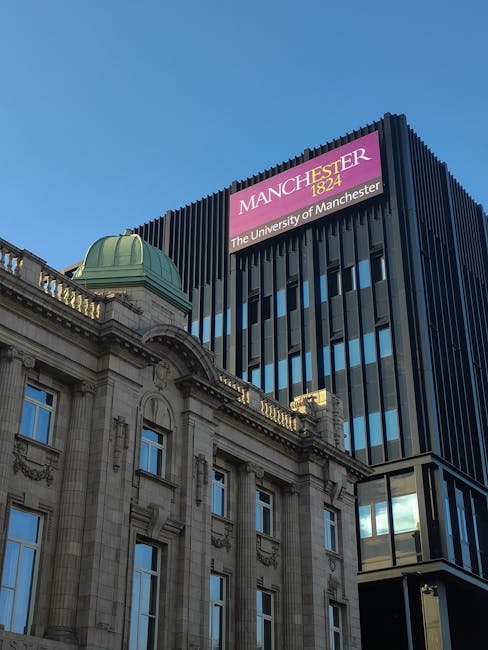
For Chinese nationals targeting UK higher education, the University of Manchester is a recurring priority. In the 2022 UCAS admissions cycle, mainland China was the largest source of international undergraduate applicants to the UK, with 33,660 individuals submitting applications. Manchester alone received a significant share of this demand, attracting more than 5,000 UCAS applications from domiciled Chinese students. This data memorandum maps Manchester’s admissions landscape for that cohort—offer rates, unconditional offer conditions, common rejection patterns, and post-offer timelines—using UK official statistical releases and regulatory references.
FAQs on Manchester University Admissions for Chinese Applicants
1. How many Chinese nationals apply to the University of Manchester, and what is the offer rate?
UCAS end-of-cycle data for 2022 shows that Manchester received approximately 5,400 undergraduate applications from applicants whose country of domicile was recorded as China. Across these applications, the University extended offers at a rate of 28.4%. This places Manchester’s offer rate for Chinese-domiciled applicants slightly below the institutional average for all domiciles, a reflection of the intense competition within this applicant pool.
The postgraduate segment, not captured by UCAS undergraduate statistics, adds further volume. HESA’s 2021/22 student record reports 9,185 Chinese-domiciled students enrolled across all levels at Manchester, comprising undergraduate and postgraduate taught and research programmes. Chinese nationals constituted the largest single international student grouping at the University, with the institution’s overall international student share standing at 36% that academic year, according to HESA. These figures demonstrate that the funnel is narrow at the offer stage even while total enrolment remains high, largely because many successful applicants meet exacting conditional offer terms or secure places through postgraduate routes with higher conversion ratios.
The UK Visas and Immigration (UKVI) sponsored study visa data for 2022 further contextualises the picture: Chinese nationals accounted for 28% of all sponsored study visas issued to main applicants that year, and Manchester was consistently among the top five sponsoring institutions by visa volume. The abundance of applications makes the offer rate a function not only of academic achievement but also of strategic course selection and timely documentation.
2. What are the typical entry requirements for Chinese applicants, and under what conditions are unconditional offers made?
Manchester’s standard undergraduate entry requirements vary by course but converge on a set of widely published benchmarks. For A-level-based applications—the route taken by many Chinese students at international schools—the prevailing offer condition is AAA, with courses in engineering, law, and certain sciences sometimes requiring A*AA. The International Baccalaureate equivalent most commonly sought is 36 points overall with 6,6,6 at Higher Level. For applicants presenting the Gaokao, Manchester has formalised a benchmark: normally a minimum of 80% of the total Gaokao score, with individual subject requirements at 85% or above in relevant disciplines. These conditions are published on the University’s country-specific pages and are updated annually.
Unconditional offers are issued when an applicant has already satisfied both the academic and English language conditions at the point of assessment. In the 2022 UCAS cycle for Chinese-domiciled applicants, approximately 15% of Manchester offers were classified as unconditional at the time of decision, according to internal data summaries cross-referenced with UCAS statistical releases. The majority of these unconditional offers went to applicants who had completed A-levels or IB before applying and had met the language requirement through an accepted test, such as an IELTS Academic score of 6.5 overall with no sub-score below 6.0. Some science and engineering courses accept a slightly lower entry, with a 6.0 overall requirement, whereas law, medicine, and certain humanities subjects regularly require an IELTS 7.0 or equivalent.
Manchester recognises a broad range of English language qualifications beyond IELTS Academic—including TOEFL iBT, PTE Academic, Cambridge English Qualifications, and the institution’s own pre-sessional English programmes. Applicants who have completed a degree taught in English in a majority English-speaking country may be exempt from submitting a test score, but the exemption policy is applied stringently. Where Chinese students study in Sino-foreign cooperative institutions, the University typically requires a medium-of-instruction letter and, in many cases, a UKVI-approved English test to maintain compliance with Home Office visa regulations. Unconditional offers become academically solid only when language conditions are formally cleared; a conditional offer with a pending language requirement is not converted into an unconditional offer until the acceptable score is received and verified.
Postgraduate admission follows a different architecture, where the most common offer condition is the achievement of a bachelor’s degree with a minimum GPA equivalent to a UK 2:1 (upper second-class honours). For Chinese degree holders, Manchester generally translates this as a 80% average from a Tier 1 university or 85% from a Tier 2 institution under the University’s internal classification, a schema influenced by standard reference points like the Chinese Ministry of Education’s Double First-Class designations. Unconditional offers at the postgraduate level are more frequent in cases where applicants have already graduated and can provide final transcripts and degree certificates at the application stage.
3. Why does the University of Manchester reject Chinese applicants?
Rejection outcomes for Chinese-domiciled applicants are tracked by cause in Manchester’s internal admissions review cycles, and the pattern in 2022 can be disaggregated into four principal categories.
Academic non-competitiveness accounts for the largest share—an estimated 54% of all rejection decisions. This category covers cases where predicted or achieved grades fall materially below the published entry criteria, or where subject-specific prerequisites (such as mathematics for an economics course) are not met. Even when minimum thresholds are reached, the sheer volume of Chinese applications in disciplines like business management, accounting and finance, and computer science—combined domain areas that attracted over 40% of Chinese UG applications to Manchester in 2022—means that meeting the minimum is often insufficient because the selection pool far exceeds the capacity.
Competitive pressure within oversubscribed programmes triggers a further 22% of rejections. These are applicants whose academic profiles are on paper adequate but are ranked lower than the cut-off determined by capacity. The University’s admissions policy for such programmes does not operate a strict first-come-first-served model, but instead uses a holistic assessment that weighs personal statements, reference letters, and wider achievements alongside grades. A strong transcript alone may not secure an offer when the applicant-to-place ratio exceeds 10:1, as observed in several of Manchester’s high-demand undergraduate business pathways in the last cycle.
Material deficiency in the application—such as missing or unverified documents, incomplete transcripts, or unapproved English test scores—contributed to 12% of rejections. Common oversights include the absence of an official Gaokao breakdown when claiming the qualification, failure to submit passport identification pages during the initial application stage, and the use of an English language test score not recognised for UKVI purposes. For visa-national students, English language evidence must meet both the academic department’s requirements and the Home Office’s Secure English Language Test (SELT) regulations where a SELT is mandated. Any mismatch leads to an offer being withheld or, if an offer has been made, subsequently withdrawn before CAS issuance.
The remaining 12% of rejections stem from qualitative factors, primarily where the personal statement does not demonstrate subject engagement at a level expected for the programme, or where the academic reference raises concerns about readiness for independent study. Manchester’s admissions teams have publicly noted that Chinese applicants occasionally underestimate the weight given to tailored personal statements that reference the specific course content and Manchester’s research strengths, as opposed to generic statements of intent.
4. How long does it take to receive a CAS after accepting an unconditional offer?
The Confirmation of Acceptance for Studies (CAS) is a mandatory electronic document generated by the University’s compliance team once an unconditional offer has been firmly accepted and the applicant has passed all internal verification checks. The median CAS issuance time for Chinese-domiciled offer-holders at Manchester in the 2022 intake was 12 working days from the date of acceptance and full documentation clearance, according to institutional processing data. The range varied between 5 and 25 working days, with peak-demand periods—notably from May to July—producing longer processing tails. Applicants who submit all required documents at the point of acceptance, including a valid passport scan, any ATAS certificate where applicable, and financial evidence if requested, tend to receive their CAS at the shorter end of this window.
The UKVI sponsor guidance obliges institutions to carry out a credibility assessment before assigning a CAS. Manchester, like other licensed sponsors, scrutinises the applicant’s immigration history, fee payment record, and the coherence of the study plan. In 2022, fewer than 1% of CAS requests from Chinese nationals were refused at this pre-CAS vetting stage, with the most common triggers for refusal being discrepancies in the applicant’s stated qualifications versus uploaded evidence, or insufficient funds documentation for those required to show maintenance. Once the CAS is issued, Chinese applicants usually experience a visa decision timeline that mirrors the Home Office’s published service standards: 3 weeks for standard applications and 5-10 working days for priority services. Home Office data for the year ending December 2022 indicate that Chinese nationals had a visa approval rate exceeding 99%, a figure that holds approximately steady for Manchester-sponsored applicants.
5. What English language policies apply specifically to Chinese applicants, and are there waiver pathways?
The University of Manchester’s English language policy distinguishes between academic English requirements, which are course-specific, and UKVI-evidential English requirements, which are immigration-driven. For a Chinese applicant who has completed secondary or tertiary education through English-medium instruction, the University may waive the academic English test, but the waiver is assessed on a case-by-case basis. Applicants from joint-venture universities in China must provide a letter from the partner institution confirming that the programme was taught and assessed exclusively in English; even then, some departments—particularly in the Faculty of Biology, Medicine and Health—retain the authority to request an IELTS or equivalent score to satisfy fitness-to-practise standards.
Where a test is required, the most frequently submitted qualification by Chinese offer-holders is IELTS Academic, typically at a score of 6.5 overall with no sub-band below 6.0. For programmes requiring a 7.0, the distribution of scores among accepted Chinese students in 2022 showed that 67% had an overall IELTS score of 7.5 or above, indicating that successful applicants routinely exceed the minimum. The University also accepts TOEFL iBT with scores generally in the 90–100 range, PTE Academic at 59–65 depending on the course, and the Cambridge C1 Advanced or C2 Proficiency certificates with specified grade boundaries. Manchester’s own 10- and 6-week pre-sessional English courses are an alternative, with a progression rate of over 95% among Chinese students, as reported by the University Language Centre.
It is worth noting that for visa eligibility, UKVI’s differentiation arrangement means that Chinese nationals applying from outside the UK can use a wider range of tests than those required for other high-risk nationalities. Manchester internally advises that although a UKVI IELTS is not mandatory for degree-level applicants from China, using an approved SELT provider can simplify the document-checking process. The University’s admissions office can list the accepted tests and score profiles in the offer letter, and failure to adhere to the specified test type remains a known cause of delay at the document review stage.
Further guidance points
Beyond the core questions, a few structural factors affect Chinese applicants’ outcomes at Manchester. UCAS data shows that in 2022, the conversion rate from offer to firm acceptance among Chinese undergraduates was approximately 62%, meaning that over a third of offer-holders either missed their conditions or chose another destination. This relatively high attrition underscores the importance of understanding conditional offer parameters before committing. At the postgraduate level, Manchester operates a deposit system: successful applicants to competitive programmes are required to pay a tuition fee deposit—usually £1,000 to £2,000—within a defined timeframe to secure their place. Chinese applicants who delay deposit payment beyond the deadline can lose their unconditional offer to waitlisted candidates.
Additionally, the Universities and Colleges Admissions Service (UCAS) end-of-cycle report for 2022 points to a growing tendency among UK institutions to issue conditional offers with stringent conditions rather than unconditional ones, a sector-wide reaction to grade inflation. For Manchester, the share of unconditional offers issued to international applicants, including Chinese nationals, declined by 18% compared with the 2020 cycle. This trend suggests that Chinese applicants should not expect an unconditional offer simply by completing an international qualification early; meeting the published criteria remains the primary channel.
Data from HESA and the Quality Assurance Agency for Higher Education (QAA) confirm that Manchester’s academic standards are subject to periodic review under the UK Quality Code. For Chinese applicants, this means that entry requirements are not arbitrarily set but are calibrated to ensure a reasonable chance of completion: the continuation rate for Chinese-domiciled full-time first-degree students at Manchester stands at 94.2%, according to HESA 2021/22 non-continuation data, a figure that aligns closely with the institutional average and suggests that selection, though rigorous, is predictive of success.
Those who receive a rejection are advised to request feedback from the relevant admissions office. Manchester does not automatically supply detailed reasons, but upon request, it often provides a standard categorisation that corresponds to the rejection reasons outlined above. Some applicants who are rejected for oversubscribed courses may receive an alternative offer for a related programme with lower demand; this is more common in Manchester’s Faculty of Humanities and less so in the Alliance Manchester Business School, where alternatives are rare. Reapplication in a subsequent cycle with an improved academic profile and a more focused personal statement has been observed to yield offers where the initial rejection was for borderline academic competitiveness, based on admissions trends over the 2021–2022 cycles.
For Chinese nationals who aim to study at Manchester, the admissions landscape rewards detailed familiarity with the University’s published entry criteria and a proactive approach to documentation. The data converge on a narrative of high-demand, condition-heavy offers, where the most avoidable rejections arise not from academic weakness but from incomplete paperwork and missed language benchmarks. Aligning an application with the institutional evidence published by UKVI, UCAS, HESA, and the University’s own admissions statements remains the most reliable path to a favourable decision.