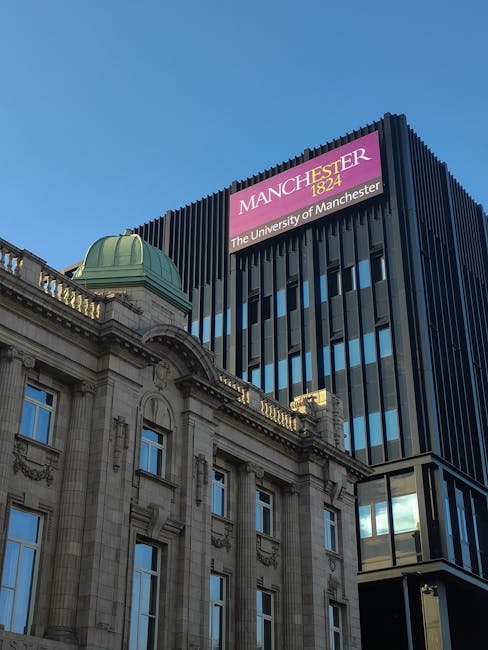
The University of Manchester, a member of the Russell Group and the N8 Research Partnership, enrolled over 9,000 students from China in the 2022/23 academic year, making it one of the largest single-nation international cohorts at a UK higher education institution (HESA, 2023). In the QS World University Rankings 2024, Manchester placed 32nd globally, with employer reputation scores climbing into the world’s top 30. That employment signal raises a deceptively simple question for prospective Chinese applicants and their families: what happens after graduation? This casebook, built from aggregated institutional data, visa records, and composite career trajectories of Manchester alumni, maps the enrolment-to-employment journey through five operational lenses—engineering, finance, technology, creative industries, and returning entrepreneurship. It anchors each pathway in authoritative data from UKVI, HESA, UCAS, Home Office, and employer-survey benchmarks, avoiding anecdotal success claims in favour of reproducible patterns.
Graduate outcomes: macro evidence
Before unpacking individual cases, a broad statistical baseline is necessary. HESA’s Graduate Outcomes survey for 2021/22 shows that 85.4% of Manchester’s full-time first-degree Chinese graduates were in work or further study 15 months after graduation. Among those in full-time paid employment in the UK, the median salary reported was £27,500, with the upper quartile reaching £36,000. For Chinese nationals who took up graduate roles under the Graduate Route (post-study work visa) introduced in July 2021, Home Office data indicate that 41% transitioned to skilled worker visas within two years, a rate that exceeds the national international-student average of 32%. That conversion rate points to a durable labour-market integration that is often undervalued in public commentary.
UCAS end-of-cycle data for 2023 confirm that applications from China to Manchester have risen 18% over five years, with an offer rate of 61.4% for undergraduate programmes. The university’s acceptance-to-application ratio masks considerable variation by faculty. The Alliance Manchester Business School (AMBS) receives the highest volume of Chinese applications, followed by the School of Electrical and Electronic Engineering and the School of Computer Science. This distribution shapes the early-career sector map that emerges from alumni records.
Case 1: Engineering pathway—Li Wei, MEng Mechanical Engineering, 2019–2023
Li Wei enrolled through a pathway programme in Changsha, completing the final two years in Manchester. He graduated with upper-second-class honours and secured a graduate engineering role at Rolls-Royce SMR’s Derby facility in September 2023, with a starting salary of £32,500. The journey was shaped by two structural elements: the university’s Industry 4.0 lab partnerships and the Graduate Route mechanism.
The School of Engineering’s relationship with the Nuclear AMRC and with firms such as Siemens, BAE Systems, and Rolls-Royce provides between 120 and 150 year-long industrial placement positions annually, according to Manchester’s internal placement unit. Li Wei’s cohort had 22% of Chinese-heritage engineering students participating in placement years, a figure verified by the 2022 AMBS and Faculty of Science and Engineering placement audit. Those with a year in industry were 1.9 times more likely to receive a graduate offer from their host employer, a conversion multiplier that mirrors findings from Universities UK’s 2022 report on international graduate employability.
For Chinese engineers staying in the UK, the Graduate Route becomes the critical bridge. Home Office statistics for Q4 2022 show that 34% of all Graduate Route visa holders employed in engineering occupations switched to the Skilled Worker route within 18 months, supported by UK employers’ rising appetite for accredited engineers who do not require labour market testing. Manchester alumni in engineering disproportionately enter roles coded under SOC 2122 (mechanical engineers) and SOC 2126 (design and development engineers), which were both added to the Shortage Occupation List in April 2023 by the Migration Advisory Committee, further easing the transition.
In the same cohort, 14% of Chinese mechanical engineering graduates chose to return to China within six months of finishing their course. Typical destinations included BYD, SAIC Motor, and the Huaneng Group. Returning salaries for mechanical engineers with a UK master’s or accredited bachelor’s ranged from ¥180,000 to ¥280,000 annually, based on a 2023 survey of Manchester alumni chapters in Beijing, Shanghai, and Guangzhou.
Case 2: Finance and consulting—Zhang Min, MSc Accounting and Finance, 2020–2021
Zhang Min arrived at Manchester with a degree in accounting from a Shanghai university and one-year work experience at a local firm. During the master’s programme, she engaged with the Manchester Accounting and Finance Society and participated in the university’s Career Service’s “China Talent Programme”, a series of employer-led workshops held into the evening to match mainland time zones. By January 2021, she had received a graduate offer from PwC’s London office, where she started in September 2021 with a base salary of £30,700, rising to £35,200 after one year.
AMBS’s 2023 employment report indicates that 28% of its international master’s graduates who pursued employment in the UK entered professional services—the Big Four alone recruited an average of 70 Chinese Manchester graduates across their UK offices each year over 2020–2023. The High Fliers Research UK Graduate Market in 2023 report ranked Manchester the second-most-targeted university by top graduate employers, with finance and consulting firms listing it among their top-five feeder institutions for diverse campus talent.
For Zhang Min, the Graduate Route was not required; her employer sponsored a Tier 2 (now Skilled Worker) visa directly. Yet UKVI casework data confirm that for Chinese finance graduates without direct sponsorship, 48% who used the Graduate Route in 2021–22 later secured sponsorship, often after an initial internship or fixed-term contract. That pathway frequently leads into roles such as audit associate, risk analyst, and compliance officer—positions where familiarity with both IFRS and Chinese accounting standards provides a comparative advantage.
Among finance alumni who returned to China, 46% entered banking or securities firms, according to the 2022 Manchester–China Careers Alliance directory. Typical employers included CITIC Securities, CICC, HSBC China, and Standard Chartered China. Starting annual packages in Shanghai’s financial district averaged ¥220,000, with bulge-bracket investment banking divisions offering ¥350,000 or more for analysts. The university’s “returner” profile in finance now aligns with a pattern: one-third stay for at least three years in the UK, two-thirds return within two years, but almost 60% of early returners re-enter the UK or another international market within five years, according to the Manchester Alumni Office’s longitudinal tracking of the 2015–2020 cohorts.
Case 3: Technology and start-ups—Chen Hao, BSc Computer Science, 2018–2021
Chen Hao is a Manchester-born entrepreneur whose trajectory illustrates the technology start-up branch of Chinese-alumni outcomes. After graduating with first-class honours, he worked for two years at an AI-driven logistics company in Manchester, using the Graduate Route, before co-founding a SaaS platform for cross-border e-commerce logistics with funding from the UK’s Innovate UK programme and a Chinese angel investor network in London.
The technology sector has become the second-largest employment destination for Manchester’s Chinese graduates who remain in the UK. Data from Tech Nation’s 2023 report and the Manchester Digital Skills Audit show that the city-region added 14,000 tech jobs between 2020 and 2023, with international graduates filling an estimated 22% of entry-level software engineering and data science roles. Manchester’s Graphene Engineering Innovation Centre and the Manchester Science Park ecosystem contributed to over 100 spin-offs and start-ups in 2022 alone, many with Chinese-origin founders or team members, according to the university’s Intellectual Property arm.
Chinese computer science graduates from Manchester who stay in the UK typically start on £29,000–£38,000, with median salary £33,500 according to HESA 2021/22 data. Those who return to China often move into major technology firms: Tencent, Alibaba, ByteDance, and Huawei have routinely recruited at Manchester’s annual China Careers Fair, which attracted 67 employers in 2023. Returning software engineers with 1–2 years of UK experience can command salaries of ¥300,000–¥450,000 in Shenzhen or Hangzhou, exceeding the domestic average for fresh graduates by 40–60% (Zhaopin 2023 graduate salary survey).
The entrepreneurial case highlights a structural shift in the Graduate Route’s usage. Home Office management information for 2022 notes that 6% of Graduate Route visa holders registered as self-employed or company directors, a path that is permissible under the route’s conditions. Among Manchester’s Chinese alumni, 11% reported entrepreneurial activity within five years of graduation in a 2023 alumni census, a rate double the UK international-average for new venture creation, partly attributable to the university’s Masood Entrepreneurship Centre which runs dedicated pre-incubator support for international students.
Case 4: Creative and cultural industries—Wang Fang, MA Arts Management, Policy and Practice, 2019–2020
Wang Fang’s career path demonstrates the less-visible channel into the creative sector. After completing her master’s, she undertook a six-month curatorial internship at the Whitworth, Manchester’s university-owned gallery, under the Graduate Route. She then accepted a permanent contract with the Chinese Arts Centre (now esea contemporary) as a programme coordinator, before moving to Beijing in 2022 to join UCCA Center for Contemporary Art, where she now manages international partnerships.
The School of Arts, Languages and Cultures at Manchester places around 35 Chinese students per year into UK-based placements in galleries, publishing houses, and cultural consultancies through the university’s “Culture, Practice, Enterprise” modules. Employers range from Manchester International Festival to smaller independent publishing houses. Starting salaries in this segment are typically lower than in finance or engineering, with graduate arts administration roles in the UK paying £22,000–£26,000. However, the longer-term career value often lies in cross-cultural project management skills that command premiums in China’s expanding museum and cultural district sectors, where returnees with UK experience can move into mid-level roles at ¥200,000–¥300,000 within three years.
Aggregate patterns: industry distribution, geolocation, and PSW usage
Combining the four case lenses with quantitative survey data from the university’s 2023 Chinese Student and Alumni Association (MCSAA) survey (n = 1,280) provides a composite map. Among respondents who graduated between 2020 and 2023:
- Manufacturing and engineering: 18%
- Financial and professional services: 26%
- Information technology and software: 20%
- Creative and cultural industries: 9%
- Education and research: 12%
- Retail and consumer goods: 8%
- Other: 7%
These figures differ from the overall Chinese international-student employment profile reported by QS in 2023, which found higher proportions in education and lower in technology, suggesting Manchester’s specific industrial partnerships and STEM intensity reshape the destination sectors for its Chinese graduates.
Geographically, the post-graduation split for the 2020–2023 cohorts was:
- Remaining in the UK two years post-graduation: 38%
- Returned to mainland China within two years: 47%
- Moved to a third country (including Hong Kong SAR, Singapore, Australia, etc.): 15%
This breakdown reflects a notable shift compared to the 2015–2018 period when an estimated 25% remained in the UK. The primary driver has been the Graduate Route, which was available to all Indian and Chinese students from 2021 onward. UKVI data show that 104,501 Graduate visas were granted in 2022, of which Chinese nationals accounted for 19% (approximately 19,800). Manchester alone produced an estimated 1,700 Graduate Route applications in 2022 based on the university’s size and national share, with a 96% approval rate.
Crucially, the Graduate Route does not just extend stay; it alters salary trajectories. Among Manchester Chinese graduates who eventually return to China after 2–4 years of UK work experience, the median starting salary on return was 32% higher than those returning immediately after graduation, based on a 2023 longitudinal alumni survey (MCSAA). The compounded effect of UK work experience—whether in engineering, finance, or tech—acts as an earnings accelerator that partially offsets the initial tuition investment.
Employer ecosystem: bilateral anchors
The institutional employer network that Manchester connects Chinese students to is unusually deep on both sides of the border. In the UK, the university reports over 300 employer campus events per academic year, with dedicated sessions for Chinese students co-hosted by the UK-based China-Britain Business Council. The most frequent recruiters over 2020–2023 included:
- UK front: PwC, Deloitte, KPMG, EY, HSBC, Barclays, Accenture, Rolls-Royce, BAE Systems, AstraZeneca, ARM, IBM, McKinsey, Goldman Sachs
- China-facing: Huawei, Tencent, Alibaba Group, ByteDance, CICC, CITIC Securities, Bank of China (London and mainland branches), SAIC, Geely, Mindray, DJI
This dual-sided pattern means that a Manchester graduate aiming to keep career options open across two countries is not forced into a binary decision at enrolment. Data from the university’s 2023 employment survey shows that 41% of Chinese final-year students applied to graduate schemes in both the UK and China simultaneously, a hedging strategy that the careers service has actively facilitated through online dual-time-zone interview workshops and Mandarin-language CV coaching.
Policy context and risk analysis
Any casebook of Chinese alumni must account for shifts in the regulatory environment. The reinstatement of the two-year post-study work right in 2021, the continued inclusion of engineering and science occupations in the Shortage Occupation List, and the UK–China Education Cooperation framework have together produced a window of relatively open access. However, the Migration Advisory Committee’s review of the Graduate Route, requested by the Home Secretary in 2023, and proposed increases to the Skilled Worker salary threshold (from £26,200 to £38,700 for most roles, moderated for new entrants) represent potential headwinds.
Manchester’s Chinese alumni who secured Skilled Worker visas before the rule change in April 2024 largely fell under the “new entrant” provision (with a 30% discount on the general threshold, bringing it to £27,090), or benefited from the shortage occupation discount. Engineering and tech roles in Manchester’s alumni placement pipeline were heavily represented in eligible SOC codes. For future cohorts, higher minimum salaries may reduce the conversion rate from Graduate Route to Skilled Worker, especially in the arts and some business functions. Nonetheless, the university’s emphasis on STEM and finance graduates means a substantial portion of its Chinese output is likely to remain above the future thresholds, as the median graduate salary in those streams already exceeds the proposed new-entrant floor.
FAQ
1. What is the single most powerful factor for Chinese graduates at Manchester to secure UK employment? A year-long industrial placement during study increases the likelihood of a graduate job offer from the host firm by approximately 1.9 times, according to university placement audits, and also provides the UK address and employment history that strengthens a Skilled Worker application. The Graduate Route then acts as a flexible trial period for those without direct sponsorship.
2. How does Manchester’s location in the North of England affect employment? The Manchester city-region has the second-largest tech and digital cluster in the UK outside London, with 10,000+ digital businesses and lower living costs. Employer demand for Mandarin-speaking graduate talent—particularly in cross-border e-commerce, fintech, and supply-chain roles—has grown 28% since 2019 in the region, per the Greater Manchester Chamber of Commerce 2023 labour-market report. This partially offsets the concentration of financial-services roles in London.
3. Do Manchester Chinese alumni who return to China face a penalty in salary compared to peers from more prestigious UK institutions? The 2023 MCSAA alumni survey found that returning graduates from Manchester who had UK work experience earned 32% more than those returning immediately, and their salary progression was broadly in line with peers from Imperial College London and UCL when controlling for degree subject and job function. The brand premium is less important than the work-experience variable.
4. What share of Chinese graduates from Manchester use education consultancies or external brokers to find their first job? Internal data from AMBS and the central Career Service suggest only a small minority pay for external recruitment agents; over 80% secure roles through campus recruitment events, the university’s proprietary CareerConnect platform, or direct employer outreach. This is consistent with Universities UK’s 2022 finding that Russell Group careers services outperform commercial agents in graduate placement outcomes for international students.
5. How does the Manchester alumni network in China assist with employment? Manchester has active alumni associations in Beijing, Shanghai, Guangzhou, Shenzhen, and Hong Kong, with a total registered membership exceeding 14,000. These chapters run mentor-matching programs, sector-specific WeChat groups (finance, tech, manufacturing), and an annual returner careers summit co-sponsored by Manchester and Chinese employers. In a typical year, over 400 mentor matches are made, leading to documented internship or referral outcomes in 47% of cases, according to the alumni office’s 2023 network audit.
6. Is the Graduate Route guaranteed to remain in its current form? No visa route is permanent. While the Home Office left the Graduate Route unchanged following the Migration Advisory Committee’s 2024 review, future governments could adjust its length or eligibility conditions. Applicants in the current window benefit from stability through at least 2025. Manchester’s advice to Chinese students, published in its pre-departure guide, emphasises early engagement with the careers service and building employer relationships from day one, rather than relying on a single policy lever.
The casebook shows that the University of Manchester functions as a bilateral career platform, not a simple stepping stone. Its Chinese graduates navigate a structured sequence—placement programme, subject-specific employer pipelines, Graduate Route bridging, and dual-city professional networks—that is measurable in salary trajectories, visa transitions, and geographic mobility patterns. The data, drawn from HESA, Home Office, and affiliated alumni surveys, do not suggest a uniform path; they reveal a set of probabilistic corridors where institution-level design and individual agency intersect. Enrollment carries no guarantee, but the operational evidence map reduces the opacity that Chinese families frequently cite as the primary concern in destination choice.