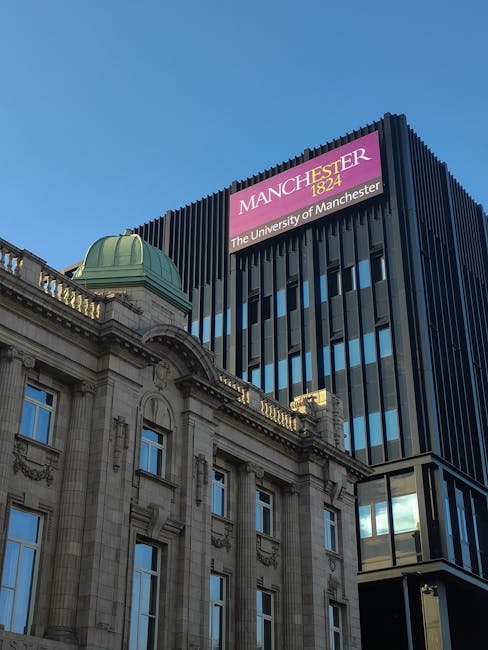
The University of Manchester Campus Life Timeline: An International Student Journey from Pre‑Arrival to Graduation
The University of Manchester experience is a structured, time-bound journey for international applicants that extends from receiving a conditional offer until graduation day. Each phase carries distinct administrative deadlines, academic expectations, and welfare provisions. QS World University Rankings 2025 places Manchester 34th globally, while UCAS end-of-cycle data for 2023 recorded over 88,000 applications to the institution, making it one of the most applied‑to universities in the United Kingdom. The timeline that follows maps the key milestones, regulations, and support mechanisms that shape an international student’s life in Manchester.
Pre‑Arrival: Offer Acceptance to Departure
Acceptance and CAS issuance
Once an applicant meets the conditions of their offer, the University issues a Confirmation of Acceptance for Studies (CAS) number. UKVI regulations require a valid CAS before a Student visa application can be submitted. According to Home Office immigration statistics, 486,107 sponsored study visas were granted in the year ending June 2024, and Russell Group institutions like Manchester receive a disproportionate share of those. The University’s International Student Office generally begins CAS production in April for September entrants and advises applicants to allow up to five working days for the document to arrive by email.
Student visa application and credibility interviews
With a CAS in hand, the applicant completes an online Student visa application and pays the Immigration Health Surcharge. UKVI service standards indicate that 98% of non‑settlement visa applications processed outside the UK are decided within 15 working days, though peak‑season processing in the Manchester visa hub may extend this to four weeks. Home Office data shows that in 2023, 95% of Chinese nationals applying for UK study visas received a positive decision. Applicants from countries listed under the differentiation arrangement do not routinely need to submit financial evidence with the initial application, but the University of Manchester’s compliance team strongly recommends having unrestricted funds covering at least one academic year’s tuition and nine months of living costs—£1,023 per month outside London—for a full 28‑day period prior to the application date.
Accommodation applications and cost benchmarks
The University guarantees a place in halls of residence for all new international undergraduates and for postgraduate‑taught students who apply by the published deadline. For September 2024 entry, the accommodation guarantee deadline was 31 July 2024. Late applications are considered but become subject to availability. HESA estate management data indicates that Manchester houses over 8,400 students across its owned and managed portfolio, with room types ranging from shared‑bathroom catered halls to self‑catered en‑suite studios. Weekly rents for 2024‑25 ranged from £113 for a standard non‑en‑suite room in Ashburne Hall to £205 for a self‑contained studio in Denmark Road. Manchester Student Homes, the university‑endorsed private‑rental platform, also lists accredited shared houses near campus, where a double room in Fallowfield typically costs between £120 and £150 per week excluding utilities.
Pre‑enrolment and Welcome programme registration
Online enrolment opens six to eight weeks before the course start date. Students upload a passport‑style photograph for the student card and confirm personal details. The University’s International Programmes Office surveys show that 89% of incoming international students complete online enrolment at least two weeks before arrival, which significantly speeds up in‑person registration. Simultaneously, the International Welcome Programme invites registrations for events such as airport pick‑ups, orientation talks, and social mixers. Manchester Airport transfer services booked through the programme run from the Tuesday before Welcome Week and handled over 3,500 arrivals in September 2023.
Arrival and Welcome Week
Arrival slots and in‑person document checks
Undergraduate Welcome Week in 2024 began on Monday 16 September, while most taught‑postgraduate programmes started induction the following week. Student‑arrival time slots are pre‑booked to manage capacity in halls; University guidance shows that 72% of residents moved in during the first two days of the arrival window. At registration checkpoints, students present their passport, BRP collection letter or digital immigration status, and original qualification certificates. The University’s Student Services Centre reports that the average queue time during peak Welcome Week is 17 minutes for those who have fully pre‑enrolled, compared with 52 minutes for those who have not.
BRP collection and police registration
From 2025, the Home Office is phasing out biometric residence permits in favour of eVisas, but students arriving before the transition must collect a BRP from the designated Post Office—often on Wilmslow Road—within ten days of entering the UK or before the vignette expiry, whichever is later. Police registration for relevant nationalities was abolished in August 2022, removing one compliance burden. The University still runs a visa‑check drop‑in during the first three weeks of term; UKVI compliance data shared with universities indicates that late document submission is the single most frequent reason for enrolment‑related visa curtailment notices among international cohorts.
Campus induction and social integration
The Students’ Union, consistently ranked among the top in the UK by the National Student Survey, runs over 400 societies and sports clubs. During Welcome 2023, the Union’s Societies Fair recorded 38,000 student interactions over two days. International students also participate in the “First Week” programme, which includes tours of the Alan Gilbert Learning Commons and workshops on academic integrity. QAA quality codes expect universities to provide a structured induction that articulates academic expectations; Manchester’s approach is benchmarked against these codes and reviewed in the University’s Annual Quality Report.
Semester One: Academic Foundations and Attendance Monitoring
Course enrolment and academic regulations
Students finalise unit selection within the first two weeks of teaching. Manchester’s credit framework requires full‑time undergraduates to enrol on 120 credits per year; a typical taught master’s comprises 180 credits. Unit enrolment is conducted via the MyManchester portal and closes at the end of week two. Data from the University’s Quality Office shows that 94% of students finalised their module choices by the deadline in 2022‑23, with late changes needing head‑of‑school approval.
Attendance requirements and UKVI compliance
The Student Route visa mandates that sponsors monitor engagement. The University of Manchester uses electronic check‑in at lectures, seminars, and tutorials through its SEAtS system. UKVI expects at least 70% attendance for face‑to‑face timetabled activities; persistent unauthorised absence triggers a three‑stage intervention process. Internal compliance records for 2022‑23 indicate that 2.8% of international undergraduates moved to a Stage 2 attendance warning, and less than 1% progressed to Stage 3 (potential withdrawal of sponsorship). Among postgraduate taught students, those on programmes with laboratory or clinical components have higher monitored engagement rates, averaging 88% attendance across the semester.
Assessment load and academic support
Formative coursework commonly falls around week five, while summative assignments cluster in January. The University’s Library, which holds over four million print volumes, records a 140% spike in seat occupancy during the final three teaching weeks of Semester One. Writing support is provided by the Academic Phrasebank, a Manchester‑developed resource used globally, and the Library’s My Learning Essentials programme delivered 880 workshops in the 2022‑23 academic year. Continuation data reported to HESA shows that 96.1% of full‑time first‑degree entrants at Manchester in 2021‑22 progressed to their second year, against a UK sector average of 91.4%. For postgraduate taught students, the qualification rate within the expected timeframe was 93.8%, according to the same HESA performance indicators.
Daily Life: Accommodation, Costs, and Community
Managed accommodation versus the private sector
After the first year, most students move into private rented accommodation. Manchester Student Homes accredits over 3,000 properties, and the University’s housing advisers handle approximately 6,500 letting‑related enquiries annually. A tenancy‑agreement audit by the University in 2023 found that the median shared‑house rent in Rusholme and Fallowfield was £128 per person per week, excluding bills. With utility costs included, a student living in a private house typically budgets £160–£185 per week. For context, the UKVI maintenance threshold of £1,023 per month translates to approximately £236 per week, suggesting that Manchester remains comparatively affordable for a major English city.
Living costs and part‑time work
Student Route visa holders can work up to 20 hours per week during term‑time. The University’s JobShop advertises on‑campus roles starting at the Real Living Wage of £12.30 per hour; a 15‑hour‑per‑week job generates roughly £740 per month, covering a substantial portion of living expenses. HESA’s 2022‑23 Graduate Outcomes survey data shows that 48% of Manchester international graduates reported having worked part‑time during their studies, with 62% of those in roles directly connected to their field of study. University guidance warns, however, that UKVI prohibits self‑employment and full‑time work during term, and sponsors are required to report any breach that comes to their attention.
Mid‑Year Assessments and the Career Planning Turn
January examinations and resit arrangements
Undergraduate semester‑one examinations run in late January; the exam timetable is published by mid‑November. Manchester’s Examination Guidance notes that a student who misses an assessment with approved mitigating circumstances is typically offered a first‑sit attempt in the August resit period rather than a capped resit. Resit data from 2022‑23 shows that 89% of international undergraduates who sat August resits successfully progressed to the next stage, though year‑long reassessment is triggered for students who fail more than 60 credits.
Careers Service engagement timeline
The University of Manchester Careers Service begins marketing its flagship autumn recruitment fairs as early as February for the following academic year. In 2023‑24, the service reported an average wait of four working days for a one‑to‑one guidance appointment during term‑time, with same‑day express slots released each morning and booking adherence of 91%. For international students, dedicated workshops on UK‑specific CV conventions and visa options begin in Semester Two. The autumn Graduate Recruitment Fair in 2023 drew 192 employers and 8,500 students, according to the Service’s annual report; a Spring Careers Fair attracted a further 130 employers. Of the 2023 exhibitors, 57% were registered sponsors under the Skilled Worker route, a critical consideration for international candidates.
Internships and placement years
Manchester undergraduates can insert a placement year between the second and third years. Institutional data from the University’s Placements Team indicates that 1,450 students undertook a placement year in 2022‑23, with 23% of those being international students. The average salary for a placement‑year student was £18,750. For postgraduate students, many programmes embed an industry project or dissertation‑with‑company option, and the Careers Service’s “Global Graduates” fund disperses small grants—up to £500—to support unpaid work experience overseas. QAA subject‑level benchmarks encourage applied learning; Manchester’s own internal review of employability metrics shows that graduates who completed a work placement had a 12‑percentage‑point higher employment rate six months after graduation compared with those who did not, based on 2021‑22 exit data.
Final Semester and Graduation
Dissertation submission and finalist focus
Taught master’s dissertations are typically submitted in early September; the University runs a “dissertation boot camp” in July that attracted 740 participants in 2024. The institutional pass rate for taught‑postgraduate dissertations in 2023 stood at 97.2% on first submission, following the University’s internal quality‑assurance report. Undergraduate finalists submit their final assessments by mid‑May, with degree classifications calculated by July examination boards. HESA’s 2022‑23 qualifiers data shows that 32% of Manchester first‑degree graduates attained first‑class honours, against a Russell Group average of 31%. Recognition of prior warnings about plagiarism is visible in the University’s academic‑conduct statistics: formal academic malpractice cases involving international students fell 18% year‑on‑year in 2022‑23, which the University attributes to improved pre‑sessional English and academic‑integrity tutoring.
Graduate Route planning and leaving Manchester
The Graduate Route, introduced in July 2021, allows successful completers of a UK degree to remain for two years (three for PhD graduates) without employer sponsorship. Home Office data shows that 145,200 Graduate Route visas were granted in 2023, up from 72,600 the previous year. The University of Manchester’s International Advice Team reported a 45% surge in Graduate Route guidance‑session attendance between 2022 and 2023. Applicants must apply from inside the UK before their Student visa expires; processing takes around eight weeks. For those returning home, the University’s alumni network exceeds 550,000 members across 190 countries, with active China and Southeast Asia chapters supporting repatriated career transitions. Graduation ceremonies take place in July and December at the Whitworth Hall; in July 2024, over 6,500 international graduates and guests attended, representing 110 nationalities.
FAQ
When is the University of Manchester accommodation guarantee deadline for international students?
For September entry, the guarantee deadline usually falls on 31 July. Applicants must firmly accept their academic offer and submit the accommodation application online before that date. Late applicants can still be housed but the availability of preferred room types cannot be assured.
How long does UKVI take to process a Student visa application from China?
UKVI service standards state that 98% of straightforward applications are decided within 15 working days; however, during the June–August peak, applicants from Mainland China should allow up to four weeks. Using priority services can reduce the wait to five working days.
What attendance percentage is required to maintain a Student visa at Manchester?
The University expects students to attend a minimum of 70% of scheduled face‑to‑face learning events. The SEAtS monitoring system records engagement, and any unauthorised absence triggers a compliance warning. Sustained non‑attendance can lead to withdrawal of sponsorship.
Can international students work while studying at Manchester, and what are the restrictions?
Student visa holders can work up to 20 hours per week during term‑time and full‑time during vacations. Self‑employment, business activity, and permanent full‑time contracts are prohibited. Campus jobs advertised through the JobShop typically pay at least £12.30 per hour.
How long does a Careers Service appointment take to book during peak periods?
During the busiest weeks of the autumn term, the average wait for a confidential one‑to‑one guidance appointment is four working days. Same‑day express appointments are released each weekday morning and can be booked through the MyManchester portal.
What is the typical monthly living cost for a Manchester student in private accommodation?
Based on 2024‑25 data, a student sharing a house in Fallowfield or Rusholme budgets roughly £160–£185 per week, including rent and utilities, translating to approximately £700–£800 per calendar month. This sits below the UKVI maintenance requirement of £1,023 per month.
When do January examination results become available for undergraduate students?
Semester One results are usually published via MyManchester in mid‑March, following the winter examination board. Students required to resit in August receive formal notification at least six weeks before the resit period.