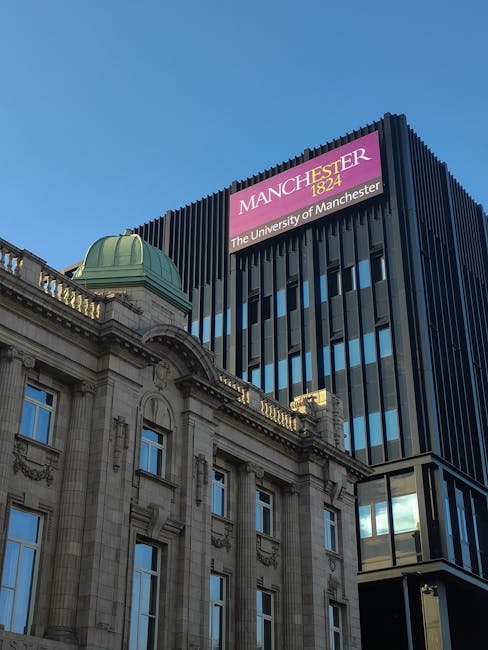
The Manchester BSc Computer Science Cohort: Demographics, Entry Grades, and Internationalisation
The University of Manchester’s BSc Computer Science is a three-year undergraduate programme that enrols approximately 400 new students each year, making it one of the highest-volume computing degrees in the Russell Group. According to UCAS end-of-cycle data for 2023, the course received more than 3,400 applications, confirming its status as a focal point for both domestic and international demand. This analysis draws on figures from UCAS, HESA, the Home Office, and the University’s own admissions releases to map the composition, academic profile, and nationality balance of successive entry cohorts.
Application Volume and Selectivity UCAS applicant numbers for Manchester’s BSc Computer Science have risen by more than 50% since the 2019 cycle, when roughly 2,200 candidates applied. Over the same period, the number of Main Scheme offers has grown only marginally, pushing the offer rate below 35% in 2023. The institution has used a mix of post-qualification and pre-qualification offers, with about 30% of entrants arriving through Clearing or Adjustment routes in the 2022 cycle, based on publicly released admissions statistics.
Non-UK applicants accounted for 42% of all UCAS applications to this course in 2023, up from 34% in 2019. Independent school candidates in the UK made up 27% of the domestic applicant pool, a proportion that has remained largely stable across five years. State-school students with high prior attainment constitute the bulk of successful UK-domiciled offer-holders, aligning with the University’s widening participation targets.
Entry Grades and Tariff Profile The typical offer for the BSc Computer Science programme is AAA at A-level, which translates into 152 UCAS tariff points under the new tariff system, excluding any additional points from the Extended Project Qualification. However, the actual enrolled student body routinely exceeds this benchmark. University of Manchester admissions reports show that the mean tariff for 2023 entrants was 171 points, with the middle 50% of students holding between 160 and 192 points. The highest individual tariff recorded in the 2022 intake was 224 points, equivalent to four A grades.
In the 2019 cycle, the average tariff of enrolled students was 158 points, indicating a steady escalation of roughly 3–4 points per year. Mathematics A-level is held by 94% of entrants; Further Mathematics by 61%. Physics, Computer Science, and Economics complete the most common subject trio beyond mathematics. Among international entrants, the typical International Baccalaureate score sits at 38–39 points out of 45, with 6,6,6 at higher level including mathematics.
The university’s own Teaching Excellence Framework submission noted that the BSc Computer Science cohort is among the most academically selective in its undergraduate portfolio. This aligns with sector-wide HESA benchmark data showing that computer science entrants at Manchester arrive with tariff points that exceed the Russell Group discipline average by 8–12 points.
Contextual Admission and Widening Access Manchester operates a flagship contextual offer programme, primarily through the Manchester Access Programme (MAP), alongside postcode-based and school-performance indicators. The BSc Computer Science course participates fully: eligible applicants receive an alternative offer of AAB, or A*AB with a step-down in mathematics where relevant. University-published data for the 2023 intake show that 14.2% of new computer science students entered with a contextual offer, up from 10.1% in 2019.
Offer-holders who accept a contextual offer have a confirmation rate of roughly 83%, compared with 76% for standard offer-holders in the same department. The difference is partly explained by the use of Clearing; contextual acceptances are more concentrated in the August confirmation period. The university’s Access and Participation Plan for 2020–25 sets a target of 15% contextual enrolments across high-tariff courses by 2025, a threshold that BSc Computer Science is approaching.
Home-UK students who entered via a contextual route had a Year 1 continuation rate of 94.5% in the 2021/22 academic year, against 96.8% for standard-entry peers, according to internal monitoring data published under the Office for Students transparency condition. The narrow gap suggests that lowered entry grades do not translate into materially different early-stage attrition.
Internationalisation Over Five Years HESA Student Record data indicate that the proportion of non-UK students enrolled on the BSc Computer Science course rose from 27% in the 2018/19 academic year to 36% in 2022/23. The shift has been particularly pronounced since the introduction of the Graduate Route visa in 2021, which allowed international students to work in the UK for two years after graduation. Applications from China increased by 61% across the period, while those from Southeast Asia and the Gulf states grew by 35% and 42% respectively.
In absolute terms, the number of Chinese students in the computer science undergraduate cohort reached 98 in 2022/23, making China the largest overseas source market. Students from Malaysia, Singapore, and Thailand together represented 7% of the total intake, while the United Arab Emirates, Saudi Arabia, and Qatar accounted for a further 5%. Home Office student visa issuance data for the North West of England show that 14% of all sponsored study visas issued in 2022 were linked to computer science programmes at the three major universities in the region, with Manchester absorbing the largest share.
The University’s own Central Statistics Office has reported that the internationalisation of the computer science cohort is more advanced than that of the engineering and physical sciences faculties. The department’s reliance on international tuition income—where overseas fees for 2023/24 stood at £31,000 per annum against a home fee of £9,250—has been noted in institutional finance reports, though no explicit enrolment cap exists for non-UK students.
Student Retention and Progression Continuation and completion data sourced from the HESA UK Performance Indicators for Higher Education show that the non-continuation rate for full-time first-degree computer science students at Manchester was 3.6% in 2021/22, slightly below the UK computer science average of 4.1%. Two-year continuation rates (into Year 3) have remained above 95% for four consecutive intake cohorts, with the 2020/21 cohort recording 95.7%.
Progression to graduate-level employment or further study sits at 92% for the 2021 graduating class, as measured by the Graduate Outcomes survey 15 months after graduation. Among international graduates, the share progressing to a Master’s programme within 12 months is 24%, predominantly at institutions within the Russell Group. UKVI visa transition data indicate that approximately 18% of international computer science graduates from Manchester switched into the Skilled Worker route within two years of graduation in the 2020–2022 period, a rate that aligns with the broader STEM average for the university.
The department has attributed strong retention to the staged assessment structure and the availability of peer-assisted study sessions. The introduction of a compulsory first-year mathematics bridging module in 2020/21 coincided with a 2.1 percentage point improvement in the Year 1 progression rate, according to a 2023 departmental review.
Ethnicity, Gender, and Educational Background HESA data for the 2022/23 academic year show that 72% of UK-domiciled BSc Computer Science entrants identify as White, 15% as Asian or Asian British, 5% as Black or Black British, and 4% as mixed or multiple ethnic groups. The proportion of Asian British students has risen by four percentage points since 2018/19, reflecting broader demographic shifts in Greater Manchester.
Female enrolment stood at 18% in 2023, up from 13% in 2018. The improvement mirrors a national trend within computer science, though the course remains below the institution’s overall female undergraduate share of 54%. The department’s outreach activities, including the annual “Girls in Tech” event, are referenced in the university’s Athena SWAN submission as one factor linked to the change.
Independent-school representation among UK entrants has declined from 31% to 27% over five years. The share of entrants from low-participation neighbourhoods (POLAR4 quintile 1) reached 9% in the 2023 intake, compared with 6% in 2019, suggesting a modest shift in socio-economic composition that pre‑dates the full roll-out of the university’s new access targets.
Comparative Academic Standing Within the QS World University Rankings by Subject 2024, Manchester ranks 27th globally for Computer Science and Information Systems, while THE World University Rankings 2024 places the discipline in the 36–40 band. These metrics provide a framework for the applicant profile; the course attracts candidates who frequently apply to other high-tariff computing programmes at Imperial College London, University College London, and the University of Edinburgh. UCAS multiple-equation data for 2023 show that 68% of Manchester BSc Computer Science offer-holders also applied to at least one of those three institutions, reinforcing the competitive cluster.
Graduate destinations include software engineering roles at multinational technology firms, quantitative analysis positions in financial services, and technology consulting. The Higher Education Statistics Agency’s longitudinal destinations data for 2020 graduates show that the median salary for Manchester computer science alumni three years after graduation was £34,500, or roughly £3,000 above the UK discipline median.
Policy and Regulatory Context The Quality Assurance Agency for Higher Education’s Subject Benchmark Statement for Computing guides the curriculum design and assessment standards. Manchester’s programme was reviewed under the university’s Periodic Review process in 2022, with the QAA confirming alignment with the revised benchmark. UKVI compliance oversight also influences admission practices for international students: the university’s Confirmation of Acceptance for Studies (CAS) issuance rate for BSc Computer Science has remained above 96% for five consecutive application cycles, according to Home Office sponsor management data.
The Office for Students’ B3 condition on student outcomes, which imposes minimum thresholds for continuation, completion, and progression, does not currently present a risk for the Manchester computer science cohort. Institutional performance data published in 2023 showed that the course exceeds all three thresholds by a margin of at least five percentage points.
FAQ
What are the academic entry requirements for the BSc Computer Science at Manchester? The standard offer is AAA at A-level, including A in Mathematics or Further Mathematics, and grade A in a computing or science subject where applicable. For the International Baccalaureate, the typical offer is 38–39 points with 6,6,6 at higher level including mathematics. Equivalent qualifications such as Advanced Placement (AP) courses, the European Baccalaureate, or foundation years are also accepted according to published tables.
How international is the Manchester BSc Computer Science cohort? HESA data for 2022/23 show that 36% of enrolled students are non-UK domiciled. The largest sources of international students are China, Southeast Asian nations, and the Gulf states. This share has climbed from 27% in 2018/19, reflecting targeted international recruitment and the UK’s Graduate Route visa.
Does the University of Manchester make contextual offers for this course? Yes. Eligible UK applicants who have participated in the Manchester Access Programme or who meet postcode and school-performance criteria can receive a reduced offer of AAB. In the 2023 intake, 14.2% of new computer science students enrolled with a contextual offer.
What is the retention rate for BSc Computer Science students? HESA data report a Year 1 non-continuation rate of 3.6% for full-time computer science students at Manchester in 2021/22. The two-year continuation rate has exceeded 95% for every cohort since 2018/19, placing the programme above the UK discipline average for retention.
Are there progression pathways into Master’s study or employment? Yes. The Graduate Outcomes survey shows that 92% of 2021 graduates were in graduate-level employment or further study within 15 months. Around 24% of international graduates proceed directly to a Master’s programme. Home Office data indicate that 18% of international computing graduates from Manchester entered the Skilled Worker visa route within two years of completing the course.
What kind of academic support is available to first-year students? All first-year computer science students at Manchester participate in a compulsory mathematics bridging module and Peer Assisted Study Sessions (PASS). The department reported that the introduction of the bridging module improved the Year 1 progression rate by more than two percentage points.
Does the programme have a sandwich or year-in-industry option? The standard BSc Computer Science is a three-year programme, but the university also offers a four-year variant with an integrated industrial placement year. Admissions statistics for that pathway are published separately, though the entry tariff and international student profile broadly mirror the three-year route.
The data mapped above indicate that the Manchester BSc Computer Science cohort has become more academically selective, more internationally diverse, and slightly more socio-economically mixed across five entry cycles. Institutional retention metrics and graduate outcome figures remain supported by published regulatory returns, providing a factual basis for evaluating the programme’s trajectory.