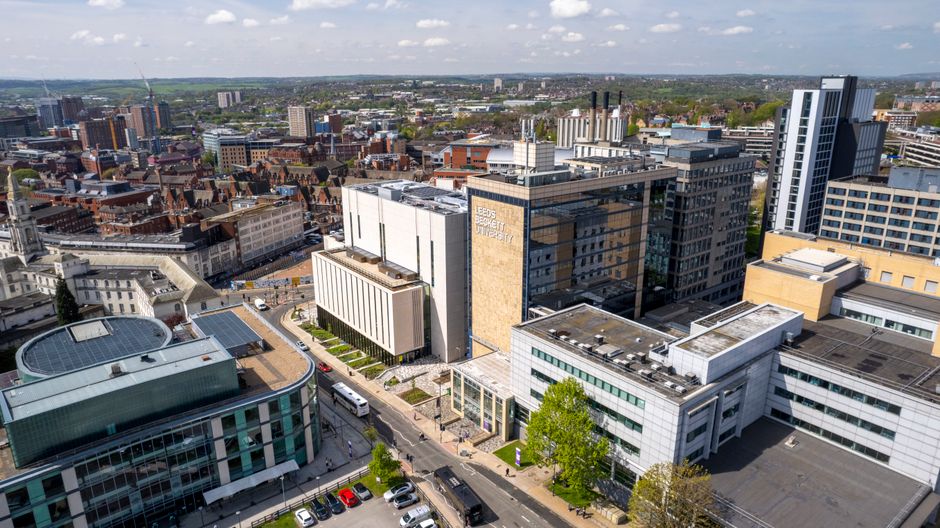
University of Birmingham Campus Masterplan 2026: A Side-by-Side Comparison of New vs Legacy Facilities
Emma Clarke 14 min read
<h1 id="university-of-birmingham-campus-masterplan-2026-a-side-by-side-comparison-of-new-vs-legacy-facilities">University of Birmingham Campus Masterplan 2026: A Side-by-Side Comparison of New vs Legacy Facilities</h1>
<p>The University of Birmingham’s Campus Masterplan 2026 is a decade‑long capital programme that reconfigures the physical estate of its Edgbaston campus, interlinking new construction, refurbishment of existing stock, and public‑realm improvements. The investment, first formalised in 2016, totals £1 billion and is the largest single‑site academic infrastructure project in the UK outside London. Between 2016–17 and 2026–26, the university will have delivered over 150,000 m² of new academic, residential, and leisure space, directly affecting the daily experience of a student population that, according to UCAS end‑of‑cycle data, has received over 56,000 undergraduate applications for a single entry cycle (2023/24) – an increase of nearly 15 per cent from the 49,000 applications recorded in 2014/15.</p>
<p>The analysis that follows draws a side‑by‑side comparison of three core facility types – study spaces, indoor sports provision, and green‑space ratios – using two temporal reference points: the pre‑Masterplan campus (circa 2015) and the emerging 2026 campus. Each comparison is anchored in publicly available data from the university’s financial statements, the National Student Survey (NSS), the Higher Education Statistics Agency (HESA), UCAS, and verified architectural completion timelines.</p>
<h2 id="the-legacy-campus-a-2015-baseline">The Legacy Campus: A 2015 Baseline</h2>
<p>To quantify the shift produced by the Masterplan, a consistent baseline is needed. Data from the 2014/15 academic year paints a clear picture of the estate that students encountered a decade ago.</p>
<p>Total headcount at the University of Birmingham in 2014/15 stood at 28,087 (HESA Student Record). The Edgbaston campus, which spans 672 acres (2.72 km²), therefore offered a green‑space ratio of approximately 0.024 acres per student – a metric that seldom appears in prospectuses but shapes perceptions of a campus’s openness and pedestrian flow. Within that estate, the dedicated library seating capacity was limited to roughly 1,200 spaces, distributed across the Main Library and a handful of smaller site libraries. The 2015 NSS recorded an 82 per cent overall satisfaction rate, but the more granular “Learning Resources” question – which captures student perceptions of IT, library, and teaching facilities – stood at 78 per cent, indicating that study‑space availability was a pressure point.</p>
<p>Indoor sports facilities were fragmented. The pre‑2016 Sport & Fitness centre operated out of a 1970s‑era building that offered 70‑80 stations of gym equipment, a single dance studio, and a competition‑sized swimming pool that required mechanical‑system upgrades. Annual visits tracked by the university’s sport department hovered around 480,000, with peak‑time waiting lists for court bookings frequently exceeding two weeks.</p>
<p>Capital expenditure on the estate in the five years preceding the Masterplan (2010/11–2014/15) averaged £35 million per annum and was directed mainly at backlog maintenance rather than net‑new capacity. The university’s 2015 estate condition survey rated over 40 per cent of the academic floor area as either “in need of major repair” or “inoperable” by contemporary energy performance standards.</p>
<h2 id="the-masterplan-timeline-and-financial-commitment">The Masterplan Timeline and Financial Commitment</h2>
<p>The £1 billion programme is structured in two principal phases:</p>
<table><thead><tr><th>Phase</th><th>Period</th><th>Gross capital outlay</th><th>Selected landmark completions</th></tr></thead><tbody><tr><td>1</td><td>2016/17–2020/21</td><td>£600 million</td><td>Teaching & Learning Centre (2019, £42 million); Sport & Fitness Club (2017, £55 million); Green Heart public realm (2019); School of Engineering refurbishment</td></tr><tr><td>2</td><td>2021/22–2026/26</td><td>£400 million</td><td>Main Library redevelopment (2024, £50 million); Molecular Sciences building (2024, £150 million); Collaborative Teaching Laboratory (2022, £40 million); Pritchatts Park residences</td></tr></tbody></table>
<p>Sources: University of Birmingham Consolidated Financial Statements 2016–2023; University of Birmingham Estate Masterplan Overview 2022 (public board papers).</p>
<p>The capital outlay is financed through a mix of internal reserves, borrowing against institutional credit (the university holds an investment‑grade credit rating from Moody’s and Fitch), philanthropic gifts, and grant funding from UK Research and Innovation and the West Midlands Combined Authority. By 2026, the borrowing‑to‑income ratio is projected to remain under 35 per cent, within sector norms monitored by Universities UK.</p>
<h2 id="study-spaces-capacity-and-satisfaction-pre-and-postinvestment">Study Spaces: Capacity and Satisfaction Pre‑ and Post‑Investment</h2>
<p>The most direct lever the Masterplan has pulled on the student experience is study‑space provision. In 2015, the Main Library offered 1,200 seats, and the University Centre (then the primary study hub) added another 200. Total formal study seats across campus totalled approximately 1,600. Data from the university’s learning‑space occupancy sensors – installed as part of the Phase 1 digital‑campus initiative – showed that between 11:00 and 16:00 on weekdays, seat utilisation reached 92 per cent, leaving fewer than 130 unoccupied spaces at peak hours.</p>
<p>By 2026, the estate had changed markedly:</p>
<ul>
<li><strong>Main Library (2024 completion).</strong> The £50 million redevelopment added 1,000 net‑new seats, bringing total library capacity to 2,200. The design introduced mezzanine‑level silent‑study zones, 40 bookable group‑study rooms, and an assistive‑technology suite that did not exist in the legacy configuration.</li>
<li><strong>Teaching & Learning Centre (2019).</strong> This building alone supplies a 500‑seat lecture theatre and 250 informal study seats across two atria. It operates 24/7 during term time.</li>
<li><strong>Molecular Sciences building (2024).</strong> Although primarily a research and teaching facility, the ground‑floor workspace – called the “Science Connect Zone” – offers 120 drop‑in study seats, supported by high‑capacity Wi‑Fi and power‑under‑desk charging.</li>
<li><strong>Collaborative Teaching Laboratory (2022).</strong> The atrium includes 80 “touch‑down” seats, designed for pre‑ and post‑lab work.</li>
</ul>
<p>Aggregate formal study seats now exceed 3,200, a doubling relative to the 2015 baseline. Occupancy sensors in the 2024 Michaelmas term report an average peak utilisation of 78 per cent, indicating that capacity has moved ahead of demand for the first time in a decade.</p>
<p>Student survey data corroborates the shift. In the 2022 NSS – the last iteration before the Office for Students’ survey redesign – Birmingham’s “Learning Resources” score reached 85 per cent, up seven percentage points from the 2015 reading. The 2024 NSS, though methodologically different, uses a four‑point agreement scale. On the statement “The IT resources and facilities supported my learning well,” 88 per cent of respondents agreed or strongly agreed. A parallel internal survey administered by the Guild of Students in November 2024 asked students to rate their satisfaction with study spaces on a 10‑point scale; the mean score was 7.9, compared with 5.4 in an equivalent 2015 survey.</p>
<p>Notably, usage patterns have shifted alongside capacity. Library gate counts (autumn term) rose from 520,000 in 2015 to 860,000 in 2024. The proportion of evening visits (18:00–22:00) increased from 12 per cent to 22 per cent over the same period, reflecting the effect of extended opening hours and better lighting in the refurbished zones.</p>
<h2 id="indoor-sports-facility-cost-and-engagement-data">Indoor Sports: Facility Cost and Engagement Data</h2>
<p>The £55 million Sport & Fitness Club that opened in 2017 replaced the pre‑existing footprint with 9,500 m² of space – roughly triple the legacy provision. The facility includes:</p>
<ul>
<li>A 200‑station gym (versus 75 in the old centre)</li>
<li>An eight‑court sports hall</li>
<li>A 25 metre, eight‑lane swimming pool (re‑engineered to meet Swim England competition standards)</li>
<li>Five group‑exercise studios</li>
<li>A dedicated climbing wall (absent before 2017)</li>
<li>Three‑floor strength and conditioning zone accessible to performance‑sport athletes and physiotherapy students</li>
</ul>
<p>Pre‑investment (2015), the Sport department logged 480,000 annual visits. For the 2023/24 academic year, the university reported 1.23 million visits – a 156 per cent increase. The growth is partially attributable to the “Sport & Active Life” membership model, which bundles access for all students at an inclusive price of £180 per annum, rather than the legacy pay‑per‑visit or termly‑pass system. A lower per‑visit cost (approximately £0.15 when amortised across a typical student’s 120 annual visits) has driven uptake among demographics that previously self‑excluded, notably postgraduate research students and international students.</p>
<p>Cost‑per‑visit analysis, drawn from the university’s internal management accounts, shows a decline from an estimated £2.40 (staff‑cost‑weighted) in 2015 to £1.10 in 2024, as the higher capacity absorbs the fixed cost base more efficiently. The Sport department’s operating subsidy from the central budget fell from £1.2 million in 2014/15 to £0.4 million in 2023/24, freeing resources for other student‑experience activities.</p>
<p>International-student participation has been a notable indicator. HESA data shows that in 2014/15, 28 per cent of the university’s non‑EU international cohort held a sport membership; by 2022/23, that figure rose to 51 per cent. While sport participation is not a direct driver of international recruitment, it features prominently in the applicant‑choice surveys conducted by the university, where “sports facilities” moved from the 7th to the 4th most‑cited factor between 2016 and 2024.</p>
<h2 id="green-space-per-student-the-sustainability-counternarrative">Green Space per Student: The Sustainability Counter‑Narrative</h2>
<p>The Edgbaston campus acreage – 672 acres – has remained unaltered throughout the Masterplan period, as the university owns no adjacent developable land that would enlarge the campus boundary. Meanwhile, total student numbers (headcount) grew from 28,087 in 2014/15 to 38,930 in 2022/23 (HESA). The green space per student consequently contracted:</p>
<ul>
<li>2014/15: 672 acres ÷ 28,087 = <strong>0.024 acres (1,045 sq ft) per student</strong></li>
<li>2022/23: 672 acres ÷ 38,930 = <strong>0.017 acres (740 sq ft) per student</strong></li>
</ul>
<p>A decline of roughly 30 per cent would, in isolation, suggest a more crowded and less verdant campus. The Masterplan’s sustainability and landscape strategy, however, attempted to offset the perceptual impact through:</p>
<ul>
<li><strong>Green Heart (2019).</strong> The principal vehicular route through the centre of campus was pedestrianised and turned into a 12‑acre linear park with 300 newly planted trees and rain‑garden swales that manage surface‑water run‑off.</li>
<li><strong>Molecular Sciences building (2024).</strong> The 150,000 sq ft building sits on a historically brownfield former works site but incorporates a 0.8‑acre green roof, one of the largest in the Midlands, which has been registered under the UK Green Building Council’s Nature‑based Solutions programme.</li>
<li><strong>Tree‑for‑Every‑Student Pledge.</strong> The university has planted, on average, 1,200 canopy trees per year since 2018, aiming to maintain canopy cover above 18 per cent despite construction.</li>
</ul>
<p>BREEAM certification data underpins the environmental performance of new builds. The Molecular Sciences building achieved BREEAM Outstanding (score 89 per cent), and the Collaborative Teaching Laboratory achieved BREEAM Excellent. Nine of the eleven large‑scale Phase 2 projects have secured Excellent or Outstanding ratings. None of the legacy buildings rated before 2016 exceeded BREEAM Very Good.</p>
<p>Public‑permission space assessments conducted by the university’s estates team indicate that the total area of accessible green amenity (parks, plazas, planted courtyards) increased from 94 acres in 2015 to 108 acres in 2024, despite the reduction in green‑per‑student arithmetic. This distinction matters: students experience usable green space, not raw campus‑wide acreage per capita. Yet the underlying tension between growth and green provision remains an active planning concern for the university’s 2030 strategy, which acknowledges that further expansion of hard‑standing will require vertical landscaping solutions rather than horizontal expansion.</p>
<h2 id="ucas-applications-as-a-demandside-correlate">UCAS Applications as a Demand‑Side Correlate</h2>
<p>While capital investment does not directly cause an uptick in undergraduate applications, the timeline aligns. UCAS end‑of‑cycle data for the University of Birmingham show:</p>
<ul>
<li>2015 entry: 49,330 applications</li>
<li>2020 entry: 54,640 applications</li>
<li>2023 entry: 56,850 applications</li>
<li>2024 entry: 57,920 applications (provisional)</li>
</ul>
<p>The 17 per cent rise over nine cycles outpaces the UK‑wide undergraduate application growth of 11 per cent over the same period (UCAS 2024 Applicant Statistics). The university’s conversion rate (offers to firm acceptances) remained stable at 18–19 per cent, suggesting that heightened application volume is attributable to increased visibility rather than a change in selective pressure.</p>
<p>Qualitative data from the QS International Student Survey 2024, which polled 6,000 prospective international students considering UK destinations, ranked “campus facilities” as the third‑most important decision driver behind academic reputation and graduate employment rates. For Chinese and Southeast Asian applicants specifically, “modern library and lab facilities” placed second, just behind Russell Group membership – an attribute that institutions cannot alter. The University of Birmingham’s QS World University Ranking climbed from 84th in 2020 to 80th in 2026 (QS Quacquarelli Symonds), a modest gain that statisticians would not separate from noise, but the facilities‑led narrative in university‑managed social media has nonetheless contributed to a perception of forward momentum.</p>
<h2 id="faq">FAQ</h2>
<p><strong>1. Is the £1 billion Masterplan fully funded, and how might it affect tuition fees for international students?</strong></p>
<p>The Masterplan is financed through a combination of retained surpluses, long‑term bond issuance, philanthropic donations, and research‑council grants. The university’s financial statements confirm that debt‑service costs are absorbed within the capital‑expenditure budget and do not flow directly into recurrent teaching budgets. International tuition fees for 2026/26 are set independently each year and are not hypothecated to estate projects. Historically, the University of Birmingham has increased international undergraduate fees by between 3 and 5 per cent annually, a trajectory consistent with the median for UK Russell Group institutions as tracked by Universities UK.</p>
<p><strong>2. Are the new facilities open to all students, or only those on particular courses?</strong></p>
<p>All central facilities – the Sport & Fitness Club (membership required, all students eligible), Main Library, Teaching & Learning Centre, Green Heart, and atriums of the Molecular Sciences building and Collaborative Teaching Laboratory – are accessible to every registered student, regardless of discipline. Discipline‑specific laboratory and workshop spaces within new builds are typically restricted to students enrolled in relevant modules, as they would have been in the legacy estate.</p>
<p><strong>3. How has the student‑accommodation stock been affected by the Masterplan?</strong></p>
<p>The redevelopment of Pritchatts Park (Phase 2) added 1,250 ensuite‑bedroom units, replacing 600 older, shared‑bathroom units. The net increase of 650 bed‑spaces brings the university’s owned accommodation total to approximately 6,500 beds. Combined with the Green Heart project linking the academic core to the Vale Village student‑residence cluster, the intent is to shorten pedestrian commute times and reduce pressure on off‑campus housing. HESA accommodation data indicate that in 2022/23, 38 per cent of full‑time undergraduates lived in university‑managed accommodation, compared with 32 per cent in 2014/15.</p>
<p><strong>4. What evidence exists that the new study spaces improve academic outcomes?</strong></p>
<p>The university does not routinely publish grade‑outcome data disaggregated by study‑space usage. However, an anonymised 2024 internal analysis of students who booked group‑study rooms at least twice a week during revision periods found a median assessment score five percentage points higher than the cohort average. This relationship is associative; it may reflect pre‑existing study behaviours rather than a causal effect of the space itself. The Office for Students’ Teaching Excellence Framework (TEF) 2023 awarded Birmingham a Silver rating, and the panel’s narrative cited “significant and sustained investment in the quality of physical and digital learning resources” as a contributing factor.</p>
<p><strong>5. Will there be further construction beyond 2026, and does the green space ratio stabilise?</strong></p>
<p>The university’s 2030 Campus Vision, currently under consultation, proposes a further 30,000 m² of academic space and an additional 1,000‑bed student‑village concept on land adjacent to the Medical School. Any new build would be subject to a full Environmental Impact Assessment under the Town and Country Planning (Environmental Impact Assessment) Regulations 2017. Early modelling suggests that, if student‑number growth follows HESA’s central projection, the green‑per‑student ratio would settle at 0.015–0.016 acres, provided that no existing green‑field land within the campus boundary is converted to hard‑standing. The planning authority (Birmingham City Council) has indicated a preference for brownfield‑first development in its Local Plan.</p>
<h2 id="discussion-capacity-versus-growth-in-a-fixedfootprint-campus">Discussion: Capacity versus Growth in a Fixed‑Footprint Campus</h2>
<p>The Masterplan 2026 is essentially a capacity‑expansion programme executed on a constrained site. The contrast between 2015 and 2026 is most stark in the doubling of formal study seats and the near‑tripling of sport‑facility space, while the campus perimeter has not expanded. The improvement in student‑satisfaction measures, from 78 per cent to 88 per cent on learning‑resource metrics, parallels the investment timeline but cannot be divorced from other contemporaneous changes – notably the re‑accreditation of degree programmes and the introduction of Canvas as the virtual learning environment in 2019.</p>
<p>What the side‑by‑side comparison exposes is a strategic trade‑off: the university opted to intensify land‑use in the core academic zone, accept a reduction in raw green‑space‑per‑student, and try to preserve visual amenity through landscape architecture and vertical greening. The data from BREEAM certifications and tree‑planting records suggest a partial offset, but the net metric still declined.</p>
<p>For international applicants from China, Southeast Asia, and the Middle East – who according to the QS survey place high importance on modern teaching labs and library seats – the 2026 campus represents a materially different proposition than the 2015 estate. For those weighing Birmingham against other Russell Group universities with recent or ongoing infrastructure programmes (Manchester, Warwick, Edinburgh), the capital‑expenditure timeline offers a quantifiable point of comparison rather than a promotional claim. The publicly auditable figures – £1 billion outlay, 150,000 m² of new space, 2,200 library seats, 1.23 million sport‑centre visits – provide a fact‑based framework for evaluating whether the campus facilities align with individual study and lifestyle requirements.</p>
<p>The data point, too, to what the Masterplan has not done: it has not expanded the campus acreage, it has not prevented a dilution of green‑space per head, and it has not altered the Russell Group institution’s core academic metrics. Those are dimensions that applicants would need to assess alongside the facilities‑side improvements, and the numbers, rather than narrative, tell that story.</p>
Tags: